ADU Permitting and Zoning in Jacksonville, FL
Jacksonville's ADU Rules in Plain English
Jacksonville allows an accessory dwelling unit on most single-family lots citywide, and the limits are more specific than most homeowners expect. There's a size cap tied to your main house, a placement rule, a homestead requirement, and a design standard the reviewer will actually check. This guide gives you the real numbers, the ordinance they come from, and the permit steps in the order the City reviews them. Sunshine State Professional Services designs, permits and builds ADUs across Duval, Nassau and St. Johns counties.
Updated September 2026. Originally published January 17, 2025.
Yes, ADUs Are Legal in Jacksonville, and Here's the Ordinance That Made It Citywide
If you looked into building an ADU before late 2022 and came away discouraged, it's worth looking again. A detached accessory dwelling unit used to be limited to one narrow zoning district, the Residential Low Density-Traditional Neighborhood Development district, which ruled out most Jacksonville lots.
That changed with
Ordinance 2022-0448-E, informally known as the Keeping Our Families Together Act, which City Council enacted on
November 9, 2022 by a 12-7 vote. It amended two parts of the Zoning Code:
Sec. 656.305, the Low Density Residential category, where the old RLD-TND-only restriction lived, and
Sec. 656.403, accessory uses and structures, where the ADU criteria sit today. A companion measure,
Ordinance 2022-0447, updated the comprehensive plan so ADUs are permitted in the agriculture, rural residential, low density residential, medium density residential, and residential-professional-institutional future land use categories. You can read the
enacted ordinance text yourself, and the criteria you'll care about are at subsection (g).
The practical result is a good one: an ADU is now an allowed accessory use on most single-family lots inside the consolidated City of Jacksonville, rather than something you'd need a rezoning to pursue.
Two limits worth knowing before you get attached to the idea:
- The Beaches and Baldwin aren't covered. Atlantic Beach, Neptune Beach, Jacksonville Beach and the Town of Baldwin run their own zoning and their own building departments. A City of Jacksonville ordinance doesn't govern a lot in Neptune Beach.
- An HOA can still say no. The ordinance didn't override private deed restrictions, and it added a certification step for deed-restricted property. More on that further down.
If your lot sits inside the consolidated city and isn't deed-restricted, you're very likely eligible. The rest of this guide is about what you can build and how to get it approved.
What Florida State Law Does and Doesn't Give You
A lot of homeowners arrive believing Florida passed a statewide ADU law that overrides local rules. It hasn't, and knowing that saves you from planning around a rule that doesn't exist.
Florida Statutes §163.31771 is permissive rather than mandatory. It says a local government
"may adopt an ordinance to allow accessory dwelling units in any area zoned for single-family residential use." It doesn't require any city to allow them. The statute defines an ADU as
"an ancillary or secondary living unit, that has a separate kitchen, bathroom, and sleeping area, existing either within the same structure, or on the same lot, as the primary dwelling unit." It also lets a city count permitted ADUs toward the affordable housing component of its comprehensive plan, and it contemplates an applicant affidavit attesting the unit will be rented at an affordable rate to a low or moderate income household.
Two serious attempts to turn that "may" into a "shall" both came close and both failed:
- SB 184 (2025) would have required, rather than authorized, local governments to adopt an ADU ordinance by a set date. It passed the Senate 37-0 on April 9, 2025 and the House 97-10 on April 30, then the two chambers deadlocked over a House amendment and the bill died in returning messages on June 16, 2025.
- SB 48 (2026) carried the same requirement. It passed the Senate unanimously, 38-0, on February 4, 2026, then died in messages on March 13, 2026.
One more point worth clearing up, because it causes real confusion. Florida did pass a significant housing law in 2026.
HB 1389, Chapter 2026-179, was signed on June 26, 2026 and took effect July 1, 2026. It's the latest evolution of the Live Local Act, covering affordable housing on government and religious-institution land, dimensional-standard protections, and tax exemption changes. It contains no ADU provisions. It doesn't create a statewide ADU right and it doesn't change Jacksonville's criteria.
So the document that governs your project is Jacksonville's own ordinance. That's the one to read, and it's the one this guide follows.
Jacksonville ADU Size Limits, Placement and Height
These are the constraints that shape the design, so it's worth settling them before anyone draws anything.
Key requirements from Sec. 656.403(g):
- Size cap. Subsection (g)(3) reads: "The building footprint shall be limited to 25 percent of the gross floor area of principal structure on the lot, or 750 square feet, whichever is less." That "whichever is less" is the part that surprises people. On a 2,400 square foot house, 25 percent is 600 square feet, so 600 is your number, not 750. You only reach the 750 ceiling once the principal structure is 3,000 square feet or larger.
- Placement. Under (g)(1), the ADU has to be located behind the primary structure. Under (g)(4), it can't sit in a required yard, so your zoning district's required yards define the buildable envelope before size even comes into it.
- Design compatibility. Subsection (g)(2) reads: "There should be a visual relationship to the main house. For new structures this shall be accomplished through similar roof shape, porches, paint color, and other physical characteristics." This is a criterion in the code rather than a styling suggestion, and it does come up in review.
- Height. An ADU is an accessory structure, so it takes the accessory-structure height limits that apply in your zoning district rather than a separate ADU-specific number. Confirm the figure for your district before you design a second storey.
Running those two numbers early, the 25 percent calculation and the required-yard envelope, tells you what's realistic on your lot in an afternoon rather than after a design round.
If you're working with an existing structure instead of building new, a
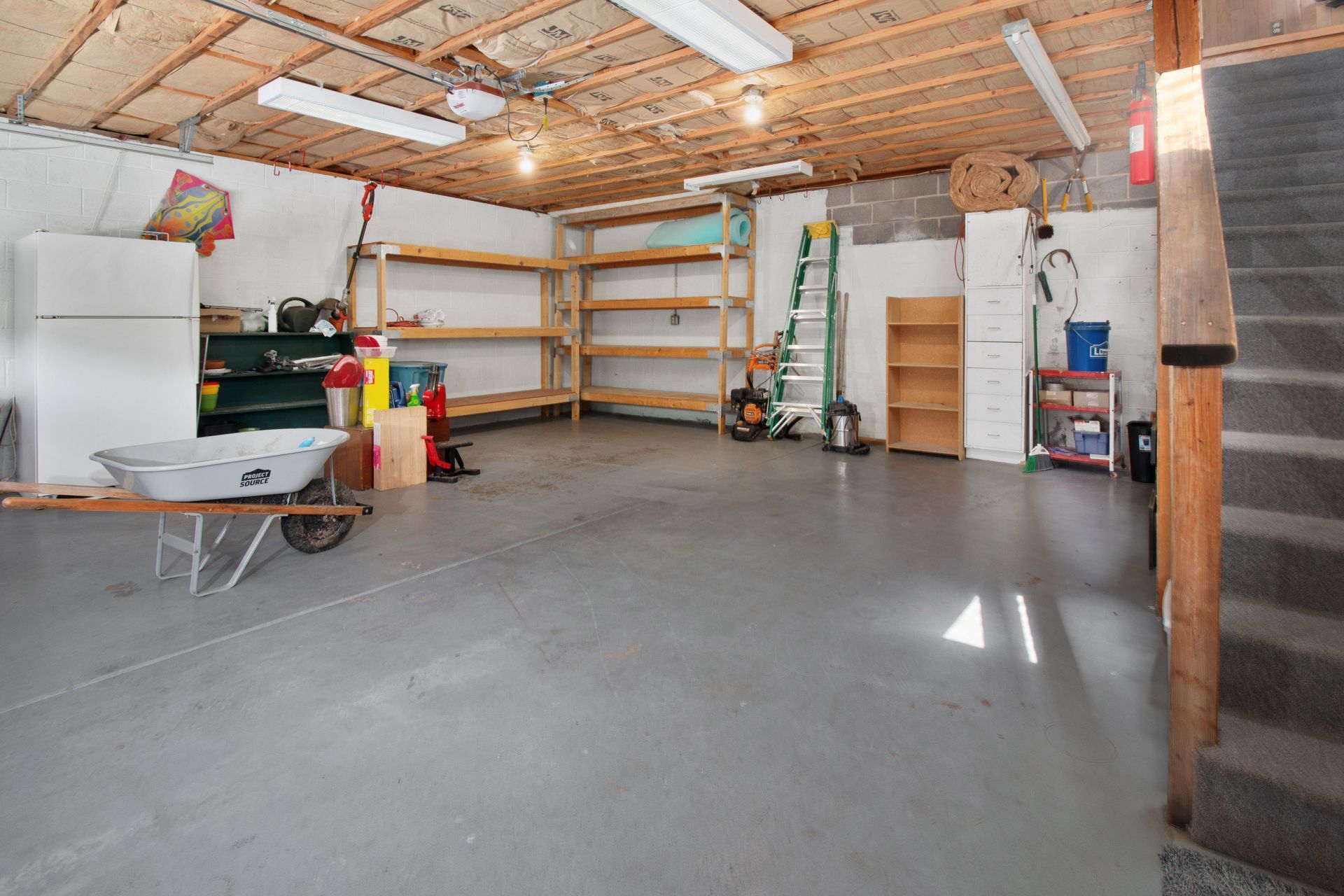
garage conversion to ADU changes the math. The footprint already exists, though the conversion still has to meet the size, egress, energy and separation requirements of a habitable dwelling.
Owner-Occupancy and Rental Rules for Jacksonville ADUs
Jacksonville ties ADU eligibility to homestead status, which is a detail most guides get wrong.
Subsection (g)(6) requires an
existing homestead exemption on the property, or a property that meets the requirements for a homestead exemption. In practice that makes this an owner-occupied provision. You can't buy a single-family lot purely as an investment, add an ADU, and run it as a two-door rental. If you aren't homesteaded and couldn't be, you don't qualify.
Deed-restricted communities get their own subsection. Under (g)(8), HOA and deed-restricted properties require certification. The 2022 ordinance didn't override private covenants, so if your documents prohibit a second dwelling, that prohibition stands regardless of what the Zoning Code permits. It's a five-minute check in your HOA documents and it's worth doing first.
Short-term rental is a separate question with a separate answer. The ADU criteria in Sec. 656.403(g) don't impose a minimum lease term, but vacation-style rental is regulated independently of your building permit, and eligibility depends on your zoning district and the City's short-term rental rules. If nightly rental is the business plan, confirm that specific use before you break ground. A permitted ADU isn't automatically a permitted short-term rental.
One more reason to do this properly: a permitted ADU is a legal second dwelling, which is exactly what makes it financeable and appraisable. An unpermitted converted garage apartment is the opposite. It surfaces at resale, it complicates insurance after a claim, and code enforcement can require its removal.
The Jacksonville ADU Permit Process, in Review Order
Jacksonville runs permitting through JaxEPICS, the City's electronic permitting, inspections and code service portal. The order matters here, because each step gates the next.
- Confirm zoning on your specific parcel. Pull your property on the City's zoning map, confirm the district, then confirm the Sec. 656.403(g) criteria apply. Check your deed restrictions in the same sitting, since (g)(8) will require certification if the property is deed-restricted.
- Establish your governing size number. Take the gross floor area of the principal structure, apply 25 percent, compare it to 750 square feet, and take the lower figure. That's the number your designer works to, and it also tells you whether the required yards leave room for it.
- Check your flood zone. If the parcel sits in a FEMA Special Flood Hazard Area, Zones A, AE or VE, the finished floor has to be elevated to at least base flood elevation plus one foot. This is a design and cost decision rather than a detail, because it changes your foundation type.
- Produce a complete plan set. You'll need a site plan showing the ADU behind the primary structure with setbacks dimensioned, construction drawings, structural documentation for Florida Building Code wind load, and energy code compliance. Utility service for the second unit gets resolved at this stage, with JEA.
- Submit through JaxEPICS, following the City's online permit submission instructions. Upload each document into its matching folder, since incomplete submittals are returned rather than reviewed and the review clock restarts. This is the single most common reason a project runs months late.
- Plan review and revision cycles. Expect at least one round of comments. Answer all of them in one resubmittal rather than piecemeal.
- Permit issuance, then Notice of Commencement. Under Florida's construction lien law, recording the Notice of Commencement before work begins is a real protection rather than a formality.
- Inspections at each milestone, then Certificate of Occupancy. The CO is what makes the unit legally habitable and legally rentable.
Follow that sequence and the timeline is predictable. Skip ahead, particularly on step 1 or step 5, and you'll pay for it in review cycles.
What You'll Actually Pay in Fees
Construction cost gets all the attention, and fees are what quietly stretch a budget, because there are more of them than most homeowners expect. Every one of these applies to a Jacksonville ADU:
- Building permit fee, calculated from the construction valuation you submit
- Plan review, payable before the Building Inspection Division starts its review, plus each required inspection
- Mobility fee, assessed for a new dwelling unit
- School concurrency review, since you're adding a dwelling unit
- JEA connection or upgrade for water, sewer and electrical service to the second unit
- Survey and engineering, which aren't City fees but are non-optional inputs to the plan set
Two things are worth knowing about how these land. Plan review has to be paid before review starts, so an unpaid invoice can quietly park your application. And current figures live in the
City of Jacksonville fee schedule, which gets revised, so quoting a number from an older article is how homeowners end up short. Check the schedule on the day you apply.
For context on build cost rather than fees, Sunshine State's ADU pricing starts at
$250 per square foot, we keep
18+ pre-approved designs on hand to shorten the design phase, and financing up to
$250,000 is available. A 600 square foot unit under the 25 percent cap is a meaningfully different project from a 750 square foot one, which is one more reason to settle the size math first.
Where Jacksonville ADU Projects Go Wrong
Most of the delays we see trace back to the same handful of missteps, and all of them are avoidable:
- Designing to 750 square feet by default. The cap is the lesser of 750 and 25 percent of the principal structure. Designing to 750 on a 2,400 square foot house means redrawing.
- Overlooking the visual-relationship requirement. A modern flat-roof box behind a 1960s hip-roof ranch will draw a comment under (g)(2).
- Forgetting the required-yard rule. Under (g)(4) the unit can't sit in a required yard, and on a narrow lot that can matter more than the size cap does.
- Submitting an incomplete plan set. Returned rather than reviewed, and the clock restarts.
- Assuming the HOA is irrelevant because the Zoning Code allows it. Covenants are enforceable independently of the City, and (g)(8) requires certification for deed-restricted property.
Every one of these is cheaper to catch in the first week than in the fourth review cycle.
Get Your Lot Assessed Before You Design
The quickest way to know what you can build is to have someone run the zoning district, the 25 percent calculation, the flood zone and the required-yard envelope on your actual parcel. That's what our free assessment covers, and it takes a conversation rather than a full plan set.
Sunshine State Professional Services designs, permits and builds ADUs,
mother-in-law suites,
tiny homes and
home additions across Jacksonville and Northeast Florida. Have a look at our
ADU construction services, our
Duval County service area, or our
ADU construction in Nassau County page if your lot is north of the river. If you're still weighing whether to build at all, start with the
benefits of building an ADU.
Call
904-517-2427 or
request a free consultation.