Screened Lanai & Pool Enclosure Additions in Jacksonville, FL: 2026 Cost & Permit Guide
If you've spent any time in a Northeast Florida backyard between June and October, you already know why so many homeowners in Jacksonville, Fernandina Beach, and Amelia Island are screening in a lanai or building a pool enclosure. It's the difference between a patio you look at through a window and a patio you actually use bug-free, storm-hardened, and shaded from the Florida sun. But before a single post goes into the ground, there are two questions worth answering first: what will it actually cost, and does it need a permit? The short answer to the second one is almost always yes. Here's what Sunshine State Professional Services, a licensed Northeast Florida general contractor, sees homeowners get right and get wrong on both fronts in 2026.
What Counts as a "Lanai" or Screen Enclosure, Structurally Speaking
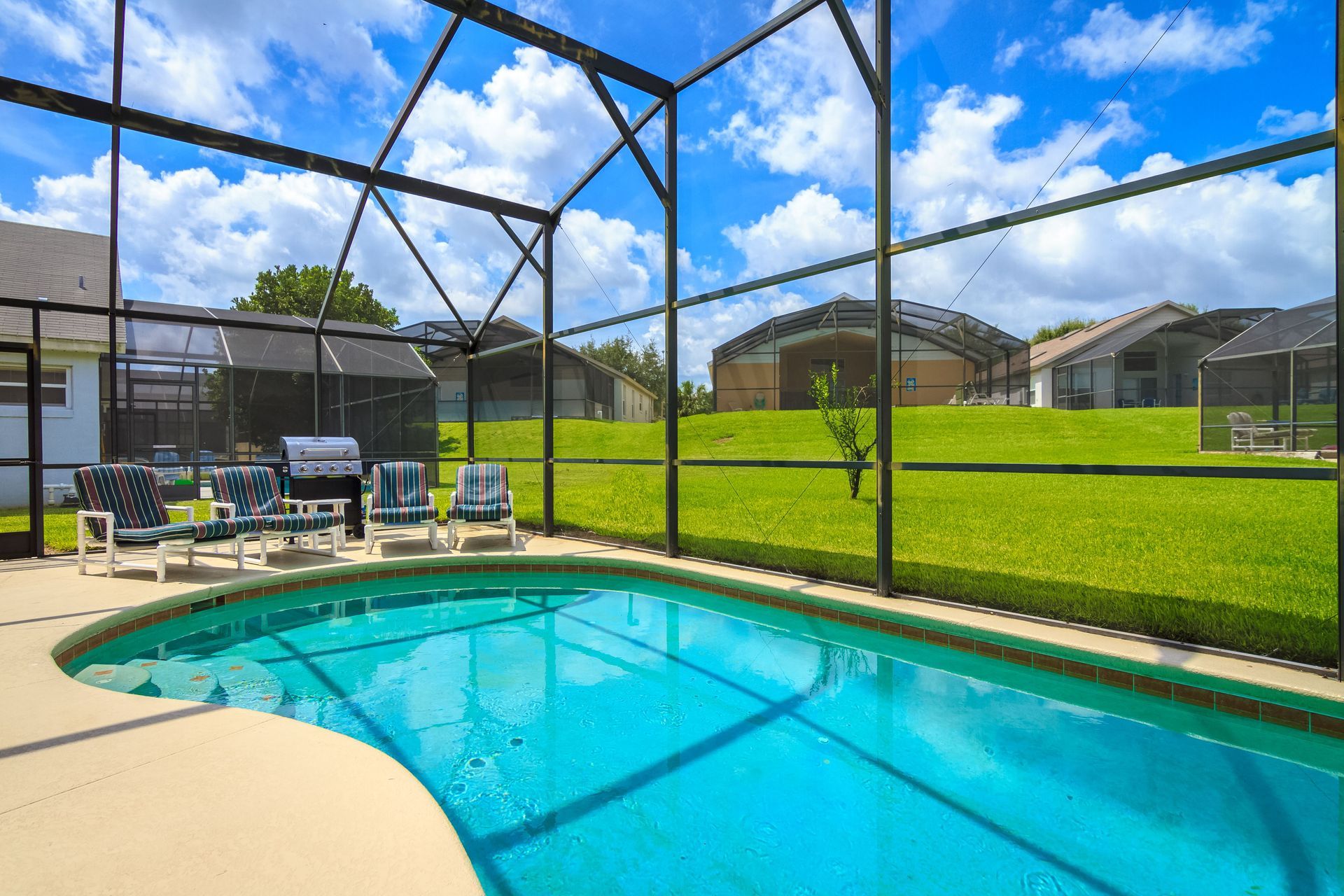
"Lanai" is the Florida term for a roofed, screened outdoor living space attached to a home, but the label covers a range of very different structures: a basic aluminum screen cage over an existing patio slab, a full screen enclosure built around a pool, or a sunroom-style addition with a solid roof, windows, and conditioned air. Each one is a different project with a different cost and a different permit path, and mixing them up is the most common source of confusion homeowners run into once quotes start coming in.
The City of Jacksonville doesn't treat a screen enclosure as a minor accessory the way it might treat a patio slab. Because these structures are permanently anchored to a concrete slab or footings, attach to the home or an existing roofline, and have to meet wind-load and uplift standards, they're reviewed the same way as other exterior additions, under the same Florida Building Code standards that govern additions and remodels generally.
2026 Cost to Screen In a Lanai or Pool Enclosure in Jacksonville
Cost is where "lanai" gets confusing fast, because price swings enormously with scope. Per 2026 local cost data, screened-in porch and lanai projects in the Jacksonville area run a typical range of $37,347 to $55,210, with a full range as wide as $11,928 to $91,756 depending on size and finish level ( homeyou.com, 2026). The lower end of that range describes a basic aluminum screen cage over an existing slab; the upper end describes a full sunroom-style conversion with a solid roof, windows, HVAC tie-in, and finished flooring, the same category as a full home addition, cost-wise.
A pool enclosure follows the same logic. The bigger the footprint and the taller the roofline, the more the wind-load engineering has to account for, and the more it costs to permit and build. That's why a fixed, itemized quote matters more here than in almost any other renovation category: two enclosures that look similar from the street can carry very different engineering and permit costs depending on how they're anchored and how tall they stand.
As John Belizario, Sunshine State's founder, puts it: "My goal is not just to do a good job but make sure my customer understands and is happy with the final result." On a project category this easy to under-scope on a napkin quote, that means walking every homeowner through exactly what tier of enclosure they're pricing before a number ever gets attached to it.
Do You Need a Permit? Jacksonville's Rules for Screen Enclosures
In most cases, yes. The City of Jacksonville's Building Inspection Division requires a building permit for nearly any project that adds a structure, alters the exterior of a home, or affects structural components ( City of Jacksonville Building Inspection Division). A screen enclosure anchored to a slab or tied into a roofline checks all three boxes. According to a 2026 review of Jacksonville-area permitting practices for outdoor enclosures, pool screen enclosures, screen rooms attached to the home, and any enclosure requiring new footings or framing all typically fall under that requirement, with one narrower exception for screening in walls under an existing lanai roof that isn't otherwise being altered structurally ( Impact Enclosures, 2026). That exception is still worth confirming with the building department directly rather than assuming it applies.
Two Jacksonville-specific numbers are worth knowing before you sign a contract. First, starting work without a permit is unlawful and carries a $250 fine, and the permit itself must be posted on the jobsite where it's visible from the street. Second, any improvement over $5,000 requires a recorded Notice of Commencement before the first inspection can even be requested. Skipping either step is one of the fastest ways an otherwise straightforward enclosure project turns into a stop-work order.
It's also worth confirming your contractor is actually licensed before signing anything, our guide on verifying a contractor's license in Florida walks through the DBPR lookup, and our breakdown of unlicensed contractor penalties in Florida covers what's at stake if you skip that check on a permitted structure like an enclosure.
HOA Approval Is Not a City Permit — and You Usually Need Both
One of the most common points of confusion for Jacksonville-area homeowners is assuming that once their HOA signs off on a screen enclosure, they're clear to build. Per that same 2026 industry review of local permitting practices, HOA review and city permitting are two separate processes that answer two different questions. An HOA is primarily concerned with appearance and neighborhood consistency, frame color, roofline, screen opacity, and visibility from the street. It does not evaluate engineering, wind-load requirements, or Florida Building Code compliance.
The city's review covers the opposite half: whether the enclosure's anchoring and structural connections meet code, whether it respects setback and zoning requirements, and whether it's engineered for Northeast Florida's wind-load standards. Even a design your HOA has already approved still needs a city permit before work starts, and the two approvals typically run on parallel, not sequential, tracks so it pays to start both at the same time rather than assuming one clears the way for the other.
Wind-Load and Hurricane Code Requirements for Your Enclosure
Because a screen enclosure is a permanent structure in a hurricane-exposed region, its design has to account for wind-load and uplift the same way a roof or a home addition does. Jacksonville's permit review specifically checks that hurricane wind-force requirements are met and that the structure's envelope complies with the Florida residential energy and building code, part of the same statewide framework moving to the 9th Edition Florida Building Code at the end of 2026. For larger enclosures, that typically means construction plans have to be signed and sealed by a licensed engineer or architect before the city will approve them.
This is also where zoning and setback rules re-enter the picture: an enclosure large enough to change your home's footprint can trigger the same setback and lot-coverage review that applies to a room addition, so it's worth checking your property's zoning district before finalizing a footprint.
How Sunshine State Approaches Your Enclosure Project
Sunshine State Professional Services is a licensed Northeast Florida general contractor (CGC 1526737), and enclosures get the same full-service treatment as any addition or remodel we take on: one in-house team of designers, engineers, and project managers who handle permitting and inspections directly with the Building Inspector, so you're not the one chasing down paperwork. Every quote is fixed-price before work starts, and every project is built to Florida Building Code hurricane standards because Northeast Florida weather demands it, not because a permit requires it.
That approach traces back to how John Belizario built the company. He started as a subcontractor working alongside his uncle, eventually earning his general contractor license and building out a full team rather than staying a one-man operation. "We don't define our customers — we try to get as much as we can, and we're looking to help people, being impactful for the community," he says of the philosophy behind it. For homeowners who want one licensed team handling a lanai screen-in, a pool enclosure, or a larger home addition including ADU projects that's the same full-service model across the board.
Frequently Asked Questions
Do I need a permit to screen in my lanai in Jacksonville?
In nearly all cases, yes. Any enclosure anchored to a slab, tied into your roofline, or requiring new footings or framing falls under the City of Jacksonville's building permit requirement, separate from any HOA approval.
How much does a screened lanai or pool enclosure cost in 2026?
Per 2026 local cost data, typical projects run $37,347 to $55,210, with a full range of $11,928 to $91,756 depending on whether you're building a basic screen cage or a full sunroom-style conversion
Does a screen enclosure need to meet hurricane wind-load code?
Yes. Because it's a permanent structure, the city reviews it for compliance with Florida's hurricane wind-force and structural requirements, and larger enclosures typically need engineer-stamped plans.
Is HOA approval the same as a city building permit?
No. HOA approval addresses appearance and neighborhood standards; the city permit addresses structural safety, code compliance, and zoning. Most projects need both, and they should be pursued at the same time.
What happens if I skip the permit?
Starting work without a permit in Jacksonville carries a $250 fine, and unpermitted structures can create problems with insurance claims and resale down the line.