Lead Paint & Asbestos Rules for Jacksonville, FL Renovations: The Pre-1978 Home Guide (2026) | Sunshine State Pro
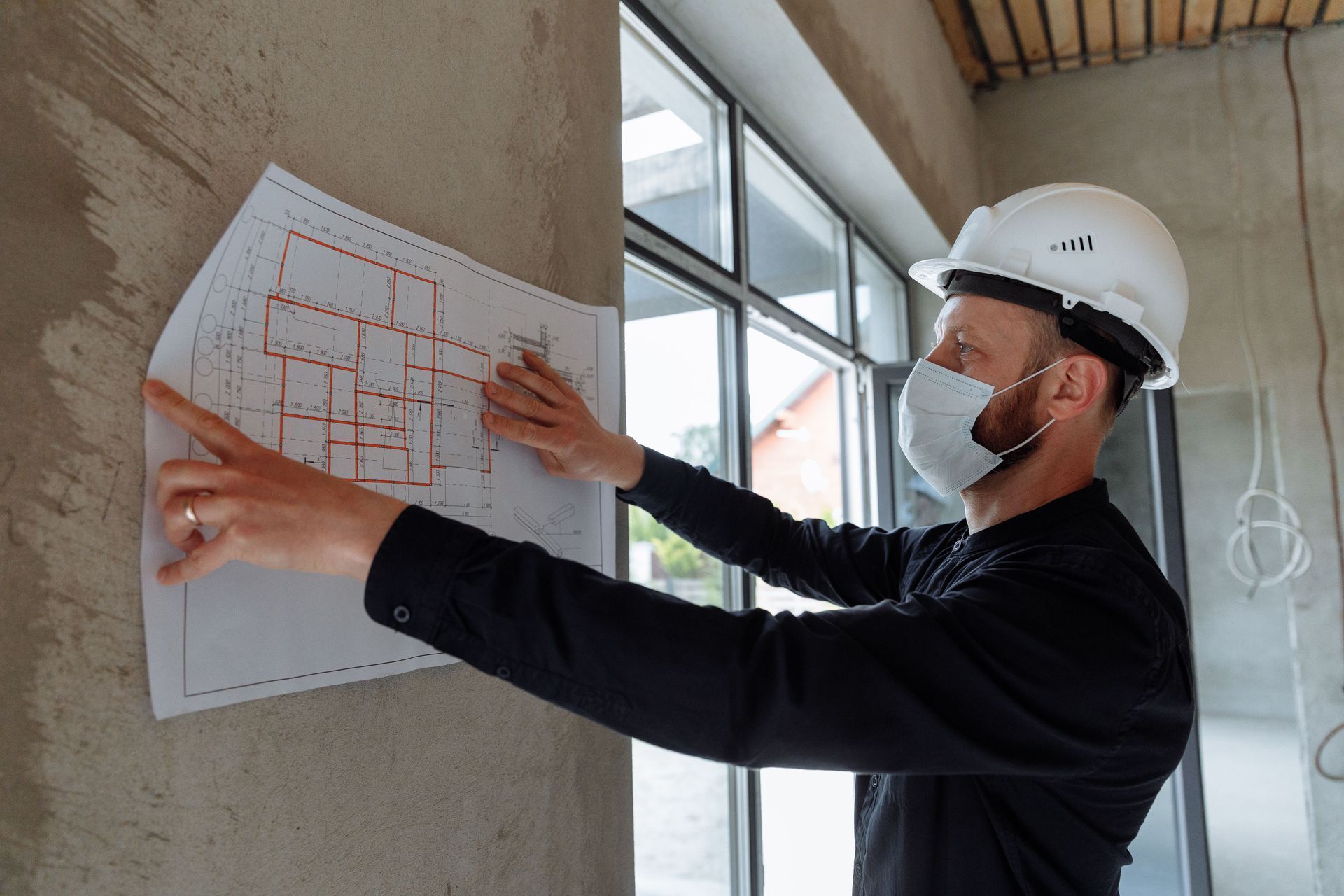
Most of the renovation questions we get in Jacksonville start with a room. The kitchen is dated, the back bedroom is too small, the bathroom tile has to go. But before we talk about layouts or finishes, our team asks one question that changes everything about how a project has to be run: what year was the house built?
If the answer is 1978 or earlier, two separate sets of federal and state rules attach themselves to your project. One is about lead paint. One is about asbestos. They are administered by different agencies, they have completely different thresholds, and this is where people get burned a project can be fully exempt from one while still being fully regulated by the other.
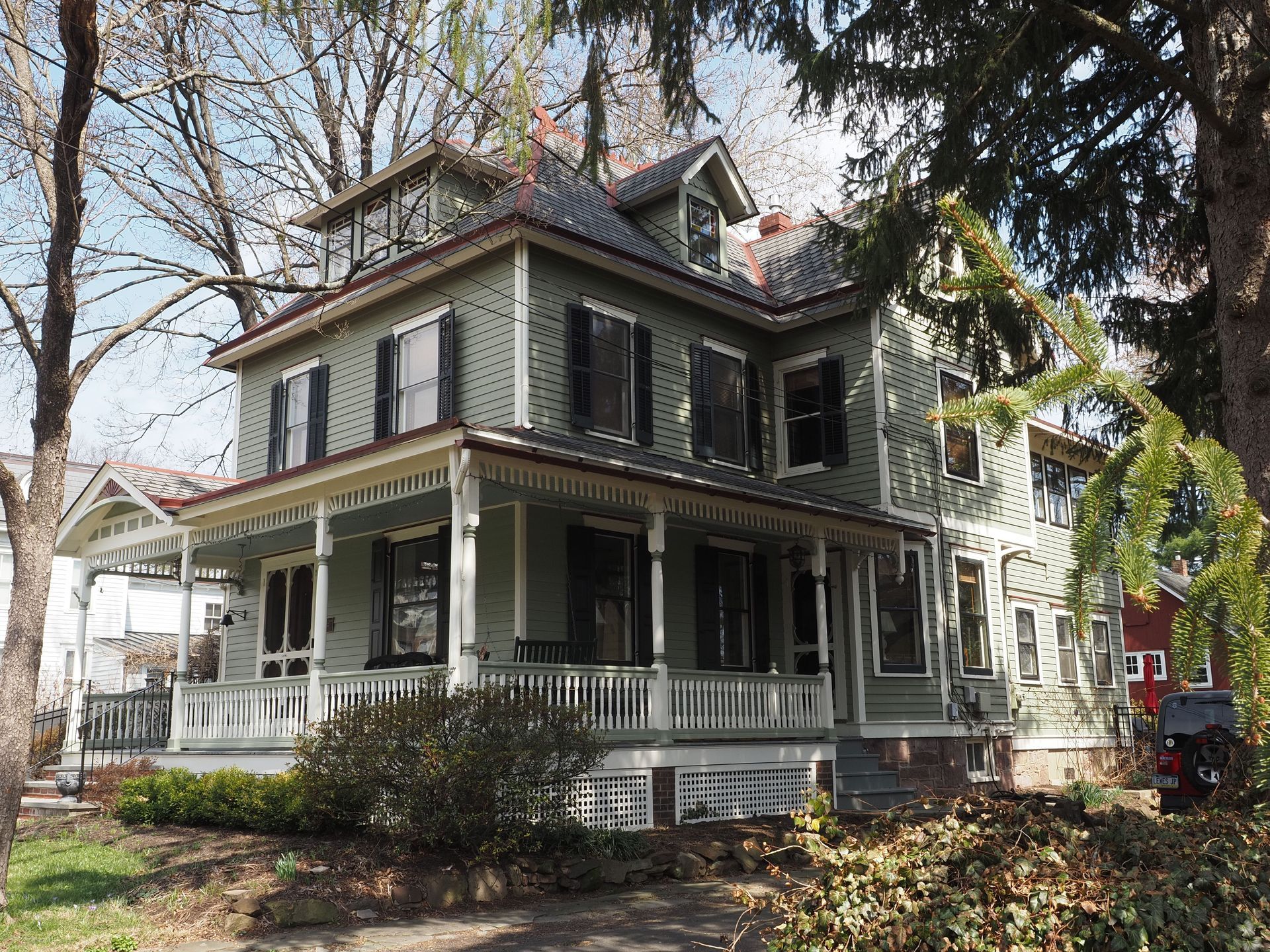
Northeast Florida has a lot of these homes. Many of the properties we work on in Riverside, Avondale, Springfield, San Marco, Murray Hill, and historic Fernandina Beach predate that cutoff. Here is what actually binds your project, in plain language, from a licensed general contractor who has to follow these rules on every job.
Why 1978 Is the Line That Matters for Lead Paint
In 1978, the federal government banned the sale of lead-based paint for use in homes, childcare facilities, and preschools. According to the EPA's Lead Renovation, Repair and Painting Program, approximately three-quarters of the homes in the United States built before 1978 still contain some lead-based paint.
That does not mean those homes are dangerous to live in. The EPA is clear that children can live safely in them as long as the paint and surfaces stay in good condition and are kept clean. The hazard is created when the paint is disturbed sanded, cut, scraped, or demolished. That is exactly what a renovation does.
So the rule is not aimed at your house. It is aimed at the work.
What the RRP Rule Actually Requires
The EPA's Renovation, Repair and Painting Rule the RRP Rule, codified at 40 CFR 745, Subpart E, requires that anyone paid to perform work that disturbs painted surfaces in homes, childcare facilities, and preschools built before 1978 be a certified firm, and that their employees be trained in lead-safe work practices. The requirements became fully effective on April 22, 2010.
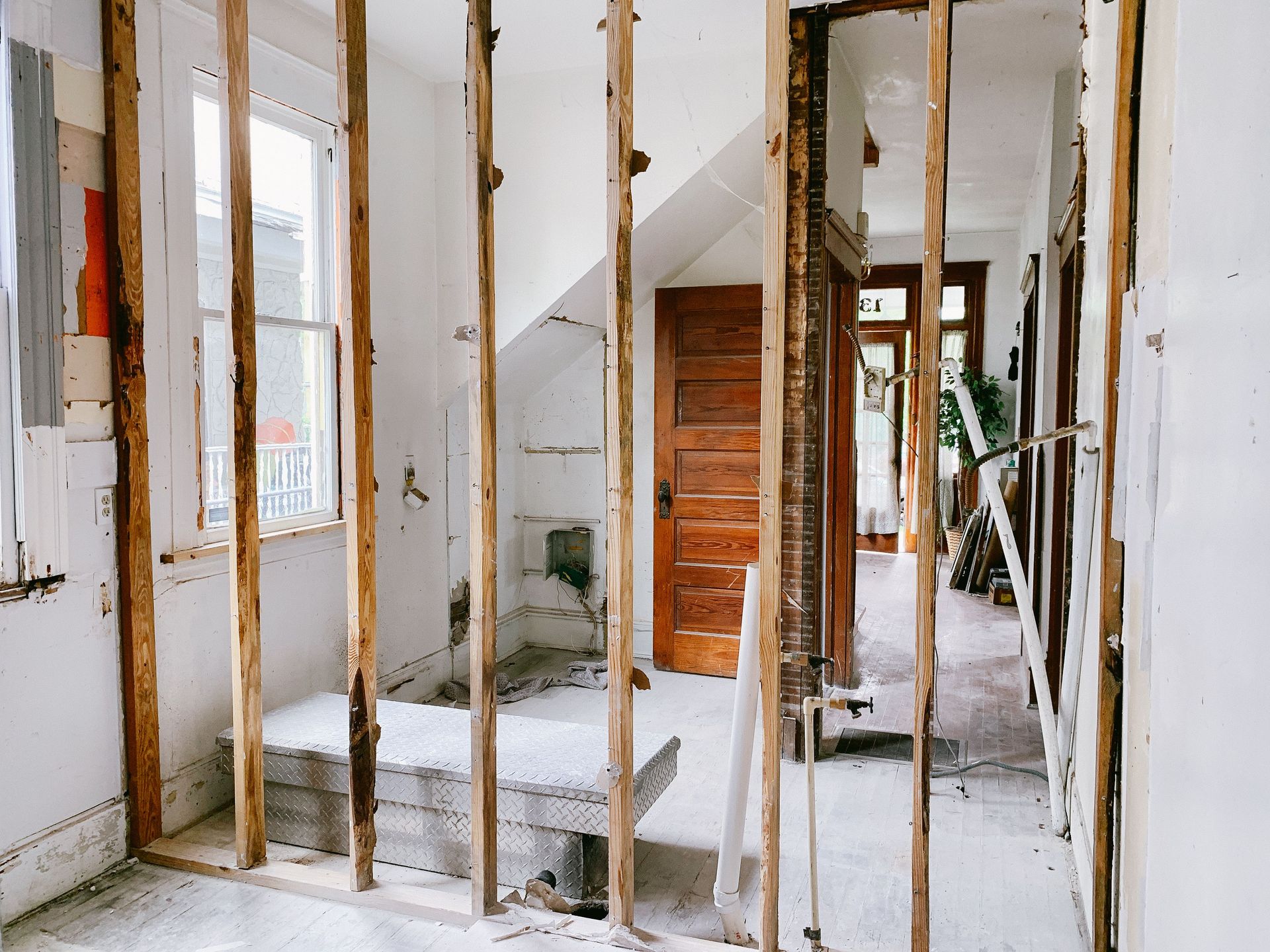
The trigger is small. Per the EPA, contractors performing projects that disturb more than six square feet of painted surfaces in a pre-1978 home must be certified and follow lead-safe work practices. Six square feet is a patch of wall about two and a half feet on a side. Cutting in a new window, opening a wall for plumbing, or pulling trim off a stairwell clears that bar without effort.
The certification applies to all firms, including sole proprietorships. There is no small-operator carve-out. If a one-person painting outfit is disturbing paint in a 1950s Murray Hill bungalow for money, that firm needs to be EPA lead-safe certified.
The Homeowner Exception, and Exactly Where It Ends
The RRP Rule generally does not apply to homeowners doing work in their own pre-1978 home. The EPA still recommends hiring a certified professional, but it does not require it of you.
That exception disappears in three situations the EPA names directly: if you rent out all or part of the home, if you operate a childcare center in it, or if you buy, renovate, and sell homes for profit. In other words, if you are renovating a rental property in Jacksonville, FL or flipping a house, you are a regulated party not an exempt homeowner. That surprises a lot of first-time investors here.
One more detail worth knowing: a temporarily vacant or unoccupied home is not exempt. The EPA has addressed this directly — if the house is empty while the work happens, the rule still applies.
Florida Is Not a Self-Administered Lead State
This is a genuinely useful local wrinkle. The EPA has authorized a specific list of states and tribes to run their own RRP programs: Alabama, Delaware, Georgia, Iowa, Kansas, Massachusetts, Mississippi, North Carolina, Oklahoma, Oregon, Rhode Island, Utah, Vermont, Wisconsin, and the Minnesota Chippewa Tribe-Boise Forte.
Florida is not on that list. The EPA administers the RRP program directly here. So when you verify a contractor's lead certification for a Jacksonville job, you are checking a federal credential, not a state one and you check it through the EPA's own certified firm directory, not through the Florida DBPR license portal you would use to verify a contractor's license in Florida.
Both checks matter. They are different databases answering different questions.
Asbestos Follows a Completely Different Rulebook
Asbestos is regulated under the Clean Air Act, not the lead statute. The EPA identified asbestos as a hazardous pollutant in March 1971 and promulgated the Asbestos National Emission Standard for Hazardous Air Pollutants the Asbestos NESHAP, at 40 CFR Part 61, Subpart M — in April 1973.
In 1982, the EPA delegated primary authority for implementing and enforcing the Asbestos NESHAP to the state of Florida. Today the Florida Department of Environmental Protection administers the asbestos program under Chapter 62-257, Florida Administrative Code.
The Residential Exemption Most People Misread
Here is the part that causes the most confusion on Jacksonville job sites.
Florida's rules include a residential exemption that releases a project from the asbestos survey and notification requirements. Per the definitions adopted in the March 2025 rule revision, summarized by the University of Florida's TREEO Center, the exemption applies to a residential building having no more than four dwelling units .
That covers most single-family homes in Duval and Nassau counties. But the exemption does not apply to:
- Any institutional, commercial, public, or industrial structure
- Any installation — meaning a group of buildings at one site under common ownership or control
- Any structure or building, including a residential building , demolished as part of a larger project
- Any building used partly for residential purposes and partly for commercial, public, or industrial use
- Any building containing condominiums or dwelling units operated as a residential cooperative
Read that third bullet twice. A house that would be exempt standing alone loses the exemption when it comes down as part of a bigger project. Mixed-use buildings the storefront with an apartment above it — lose it too.
When a Survey Is Required, and the 10-Day Notice
Where the exemption does not apply, an asbestos survey is required unless the total project size falls below all of these thresholds: 260 linear feet on pipes, 160 square feet of other facility components, or 35 cubic feet of components whose length or area could not be measured.
If the project involves removal of asbestos-containing material above the NESHAP thresholds, a Notice of Renovation or Demolition must reach the appropriate compliance office at least 10 working days before the project start date . Not ten calendar days. Ten working days which, around a holiday, can mean two full weeks of lead time you have to build into the schedule.
Effective March 23, 2025, Florida DEP revised the asbestos program rule to update definitions, clarify the notification procedure, and simplify the fee schedule. The fee is now two-tiered: a flat $200 for any notification submitted on paper or electronically with a "Pay Later" invoice, or a discounted $100 when the notice is filed electronically through the DEP Business Portal using the "Pay Now" feature. The revised notice form also requires a Florida Licensed Asbestos Consultant license number.
One local note that saves phone calls: Duval County and the City of Jacksonville operate their own local air program , so notifications for Jacksonville projects route through that local office rather than the state district. Nassau, Clay, and St. Johns County projects fall under DEP's Northeast District, reachable at 904-256-1700.
Where the Two Rules Collide
This is the single most important thing on this page, and it is the mistake we see most often.
A typical Jacksonville single-family home is exempt from Florida's asbestos survey and notification requirements. That same home is fully covered by the federal lead RRP rule if it was built before 1978.
The exemptions are not transferable. A contractor who tells you "residential is exempt, we're fine" has answered the asbestos question and said nothing at all about lead. Those are two agencies, two rulebooks, two sets of paperwork. Getting a clean answer on one does not get you a pass on the other.
This is precisely the kind of compliance gap that turns a smooth remodel into a stop-work order, and it is why we handle the regulatory legwork in-house rather than leaving it to the homeowner to sort out. Our team includes engineers, estimators, project coordinators, and project managers, and part of what they do before demo day is establish which of these rules actually attaches to your address.
Hurricane Damage Changes the Lead Rules — Temporarily
Northeast Florida homeowners should understand this one before they need it.
The RRP Rule contains an emergency provision at 40 CFR § 745.82(b). For renovations that were not planned but result from a sudden, unexpected event that presents a safety or public health hazard, storm damage, flooding, a failed roof — firms are exempt from the information distribution, warning sign, containment, waste handling, training, and certification requirements, but only to the extent necessary to respond to the emergency.
What is not waived matters just as much. Per EPA guidance on post-disaster renovations, firms must still comply with the cleaning requirements, the cleaning verification requirements, and the recordkeeping requirements. Cleaning verification still has to be performed by a certified renovator.
And the exemption has a hard stop. Once the portion of the work that addresses the source of the emergency is finished, everything after that is subject to the full rule. Tearing out soaked drywall ahead of mold growth may qualify. Rebuilding and repainting that wall afterward does not — that is a standard regulated renovation again, and it sits right alongside the mold remediation licensing rules Florida enforces after any water intrusion event.
The Whole-House Gut Exception
There is one more EPA position worth knowing if you are considering a down-to-the-studs project. The RRP Rule does not apply to new construction, and the EPA has explained that it generally does not apply to a project that demolishes and rebuilds a structure to the point where it is effectively new construction. Similarly, in a pre-1978 single-family, single-level home where all interior and exterior painted surfaces are removed and replaced, including windows, the rule's provisions would not apply.
The threshold there is genuinely total. Partial removal one wall, one level of a multi-level house keeps you squarely inside the rule. If you are weighing a gut renovation against a phased approach, this is a real factor in how you sequence a whole-home renovation, and it is worth settling before drawings are finalized.
What to Ask Before Anyone Swings a Hammer
If your home predates 1978, put these questions to every bidder:
- Is your firm EPA lead-safe certified? Ask for the certification, then confirm it yourself in the EPA's firm directory. Remember that in Florida this is a federal credential.
- Will this work disturb more than six square feet of painted surface? On any real renovation the answer is yes, and a contractor who says otherwise has not thought about it.
- Did I receive the "Renovate Right" pamphlet? Federal law requires that you receive this EPA information before work starts on a regulated job.
- Does the asbestos residential exemption apply to my specific project? Not to houses generally — to this project, including whether it is part of a larger scope.
- If a survey or 10-day notice is required, who files it and when? Ten working days is schedule time. It belongs on the timeline in writing.
A contractor who cannot answer these cleanly is telling you something. These rules are not obscure; they are ordinary conditions of doing this work legally in Northeast Florida the same category of homework as the Jacksonville building permit process or the review requirements for Fernandina Beach historic district renovations. Florida also takes an unusually hard line on what happens to unlicensed contractors, which is worth understanding before you hand anyone a deposit.
Frequently Asked Questions
Does the EPA lead rule apply if I do the work myself?
Generally no, not in your own owner-occupied home. But it does apply if you rent out all or part of the property, run a childcare center there, or renovate and resell for profit. If you do the work yourself, the EPA recommends containing the work area, keeping children and pregnant people out, minimizing dust with wet methods or HEPA-attached tools, and cleaning thoroughly with a HEPA vacuum and wet wiping.
My house is a single-family home. Do I need an asbestos survey?
Usually not — Florida's residential exemption covers residential buildings with four or fewer dwelling units. But confirm your project is not part of a larger demolition scope and that the building is not partly commercial, because either fact removes the exemption.
How long does the asbestos notice take?
The Notice of Renovation or Demolition must be received at least 10 working days before the project start date. Filing it electronically through the DEP Business Portal with the "Pay Now" option also cuts the fee from $200 to $100.
Is lead paint work the same as lead abatement?
No. The EPA treats RRP and abatement as two separate programs with different certifications and different regulations. Abatement is work specifically designed to permanently eliminate lead-based paint hazards. RRP covers ordinary renovation, repair, and painting that happens to disturb lead paint along the way. Most remodels are RRP, not abatement.
Who can I call with a lead question?
The National Lead Information Center, at 1-800-424-LEAD (5323), fields questions from homeowners and contractors alike.
Renovating an Older Northeast Florida Home the Right Way
Sunshine State Professional Services is a licensed general contractor — Florida CGC 1526737 — serving Jacksonville, Fernandina Beach, Amelia Island, Ponte Vedra, and St. Augustine. Our founder, John Belizario, started in this trade as a subcontractor before earning his general contractor's license, and that path shapes how the company works: the goal is not just a good job, but making sure the homeowner genuinely understands the process and is happy with the result.
For older homes, that understanding starts with the rules above. Whether the project is a full remodel, a home addition, an accessory dwelling unit, or a Duval County ADU, we identify which regulations attach before demolition begins — not after an inspector does. And if you are still in the early stages, our guide to renovating an older home in Jacksonville covers what else to expect.
Call 904-517-2427 to talk through your project with a licensed team that handles the compliance work for you.