4-Point Inspection in Florida: What Jacksonville Homeowners Need to Know Before You Renovate
Get a renewal notice with a surprise line item "4-point inspection required" and most Jacksonville homeowners have no idea what that means or why their insurer suddenly cares about the age of their electrical panel. It is not optional paperwork. In Florida, a failed 4-point inspection can mean a denied policy, a non-renewal, or a list of repairs you have to complete before your carrier will write coverage at all. For homeowners in a 20-, 30-, or 40-year-old Jacksonville house, that notice is often the first real signal that a system in the home is quietly at the end of its life.
This guide breaks down what a Florida 4-point inspection actually checks, when insurers require one, the roof-specific rule that trips up more homeowners than any other section of the form, and what to do before the inspector arrives. It also covers the point where "pass the inspection" turns into "this is a renovation project, not a repair."
What a Florida 4-Point Inspection Actually Checks
A 4-point inspection is narrower than a full home inspection. Where a buyer's inspection covers the whole structure attic, foundation, appliances, doors, windows, a 4-point inspection looks at exactly four systems: electrical, plumbing, HVAC, and roof . It exists for one purpose: to give an insurance underwriter a snapshot of the systems most likely to generate an expensive claim.
A Florida-licensed inspector documents the age, type, and condition of the wiring, plumbing, and heating/cooling system, plus the age and condition of the roof. Any serious hazard the inspector finds exposed wiring, an active leak, evidence of past water intrusion is flagged, and most carriers will not write or renew a policy until it is repaired.
Because Sunshine State Professional Services is a licensed general contractor handling everything from kitchen remodels to full home additions, we see the inspection form from the other side constantly it is usually what brings a homeowner to us for a renovation quote in the first place.
When Insurers Require One: The 20-Year Trigger
Citizens Property Insurance Corporation, Florida's insurer of last resort and a benchmark most private carriers follow, requires a four-point inspection for all property owner, dwelling, and mobile home applications on properties more than 20 years old. That threshold is not a rumor or a regional quirk — it is written into Citizens' own underwriting requirements, and most Northeast Florida carriers apply a similar age cutoff, sometimes as low as 15 years in high-risk coastal ZIP codes.
If your Jacksonville, Fernandina Beach, or Palm Coast home was built before roughly 2006, expect a 4-point inspection the next time you shop for a new policy, switch carriers, or come up for renewal with an insurer that has tightened its underwriting. It is one more reason storm-hardening work like the kind covered in our wind mitigation inspection guide and a 4-point inspection tend to arrive on a homeowner's desk around the same time — carriers frequently request both together for older homes.
The Roof Gets Its Own Rule — And It's Stricter
Of the four systems, the roof causes the most denials, and Florida applies a more specific standard to it than to wiring or plumbing. Under Citizens' own guidelines, roofs older than 25 years (asphalt shingle or similar "soft" materials) or 50 years (tile, slate, clay, concrete, or metal "hard" materials) require documentation showing at least five years of remaining useful life before a policy can be written. If a licensed inspector determines the roof has less than five years left, the homeowner has to provide proof of a full roof replacement before coverage is issued, a repair estimate is not enough.
In practice, most Jacksonville carriers move well before that ceiling. Industry data on 4-point failures shows insurers commonly decline coverage for roofs older than 15 to 20 years, long before the state's own 25-year threshold. If your roof was installed in the early 2010s or before, budget for this conversation with your insurer now rather than during a renewal scramble. Our roof insurance rule breakdown covers how Florida's age-based roof standards interact with the 4-point form in more detail.
What Actually Fails a 4-Point Inspection in Florida
The inspection does not carry an official pass/fail score, but insurers act on the findings as if it does. Based on documented underwriting criteria, the most common failure points are:
- Electrical: outdated panel brands with a known fire-risk history — Federal Pacific and Zinsco panels are frequently declined outright — along with double-tapped breakers, aluminum branch wiring, knob-and-tube wiring, and missing GFCI protection in kitchens and bathrooms.
- Plumbing: polybutylene piping, active leaks, corroded supply lines, and water heaters well past their rated service life.
- HVAC: non-permanent heating (a space heater as primary heat, for example), visible duct leakage, or a system that will not reliably heat and cool on test.
- Roof: curling or missing shingles, sagging decking, exposed underlayment, or documented age past the carrier's cutoff with no proof of remaining life.
Any of these can trigger a repair requirement, a coverage exclusion for that peril, or a straight decline which is exactly why so many of these repairs end up folded into a broader bathroom remodel or restoration project rather than handled piecemeal.
How to Prepare Before the Inspector Shows Up
A 4-point inspection typically takes 30 to 45 minutes, and a little prep work beforehand can change the outcome. Before your scheduled visit:
- Check the age of your roof against your carrier's cutoff and have the installation date documented if you can.
- Replace missing or visibly damaged shingles and clear debris from the roofline.
- Swap out broken electrical outlets and install GFCI outlets anywhere they are missing near water sources.
- Fix any leaky faucets and reseal dripping supply lines.
- Change the HVAC air filter and run the system through a full heating and cooling cycle to confirm it works.
These are the same prep steps insurance underwriters point to as the fastest way to improve an inspection outcome, and a 4-point inspection is generally considered valid for one year — so getting it right the first time saves you from doing this twice.
If you are already scheduling other storm-prep or permit work, it is worth reviewing our guide to navigating Jacksonville's building permits and our notes on the best time of year to schedule construction work so repairs and inspections line up instead of competing for the same contractor window.
When "Pass the Inspection" Really Means "Time to Renovate"
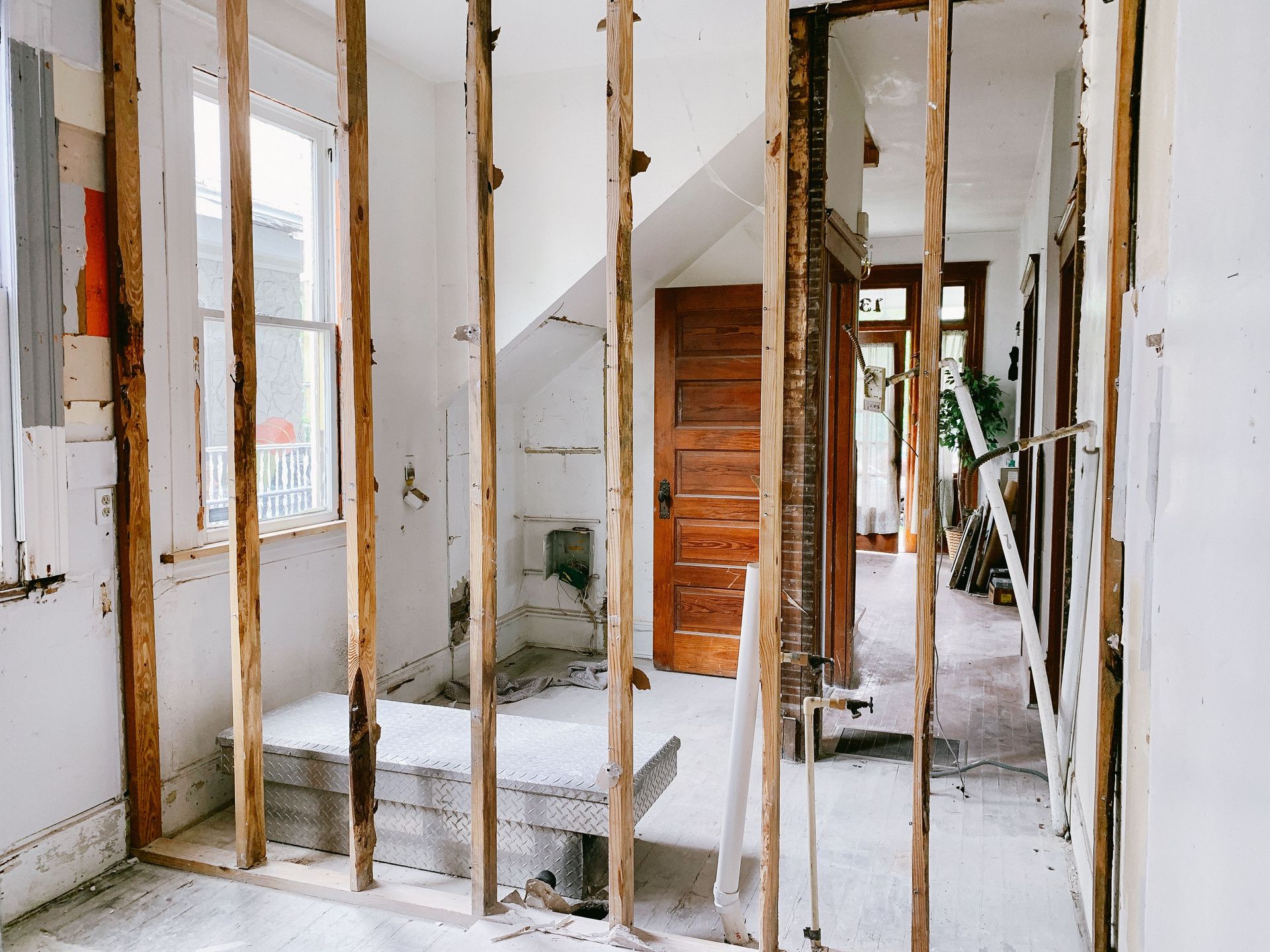
Sometimes a 4-point inspection turns up a problem that is not a quick fix an electrical panel that needs full replacement, a roof past its remaining-life window, plumbing that needs to be repiped throughout the house. That is a different conversation than swapping an outlet, and it is where a licensed general contractor matters more than a handyman.
John Belizario, founder of Sunshine State Professional Services, built the company after years working construction from the ground up in Northeast Florida. "My goal is not just to do a good job but make sure my customer understands and is happy with the final result," he says of how the team approaches projects including the ones that start with an insurance company's repair list rather than a homeowner's wish list. Because Sunshine State holds a general contractor license and keeps engineers, estimators, and project managers in-house, a failed 4-point inspection can become one coordinated renovation instead of three separate emergency calls to an electrician, a roofer, and a plumber.
That matters even more right now: with financing costlier for a new home purchase, more Northeast Florida homeowners are choosing to upgrade the house they already have instead of buying new — and an aging electrical panel or roof nearing its insurance cutoff is often the push that starts that renovation.
Frequently Asked Questions
How old does a home have to be for a 4-point inspection in Florida?
Citizens Property Insurance Corporation requires one for any property, dwelling, or mobile home application on a home more than 20 years old, and most private Florida carriers use a similar age threshold.
What fails a 4-point inspection?
The most common failures are outdated or fire-risk electrical panels (including Federal Pacific and Zinsco brands), double-tapped breakers, polybutylene plumbing, active leaks, and roofs past the carrier's age cutoff with no documented remaining life.
How much does a 4-point inspection cost?
Typical cost runs roughly $75 to $200, depending on your home's size, age, and location, and is usually paid by the homeowner rather than the insurer.
How long is a 4-point inspection valid?
Most insurers treat a 4-point inspection as valid for one year. Switching carriers after that window generally means a new inspection is required.
If your Jacksonville home's next 4-point inspection turned up more than you expected — an aging panel, a roof running out of remaining life, plumbing that needs more than a patch — reach out to Sunshine State Professional Services for a free consultation. We will walk the inspection report with you and tell you honestly whether it is a repair or a renovation.