Polybutylene & Galvanized Pipe Insurance Non-Renewal in Florida: A 2026 Jacksonville Guide
If you own an older home in Jacksonville, Nassau, or St. Johns County, a routine insurance renewal can turn into a non-renewal letter over something you've never seen: the pipes inside your walls. Florida's property insurance market has tightened underwriting standards across the board, and plumbing material is now one of the most common reasons a policy gets flagged. If you're planning a renovation, or you just opened a letter you didn't expect, here's what's actually driving it, what Florida law requires your insurer to do, and what fixing it costs in 2026.
Why Florida Insurers Are Suddenly Flagging Older Plumbing
Florida's homeowners insurance market has spent the past several years in a well-documented crisis, and carriers that remain in the state have responded by tightening underwriting standards wherever they can. Plumbing has become one of the most common triggers for a cancellation or non-renewal letter, because a failed pipe inside a wall can leak for months before anyone notices, rotting framing and growing mold long before a claim is ever filed. Insurers that have paid out on those claims are now underwriting much more cautiously against the risk before it happens.
The mechanism most carriers use to catch this is the four-point inspection, which nearly every insurer requires on Florida homes built before 2000, and increasingly on newer homes too. It covers four systems: roof, HVAC, electrical, and plumbing. On the plumbing line item, a licensed inspector documents the supply-line and drain-line materials, the system's age, and any visible corrosion, staining, or active leaks. That form goes straight to your insurer, and what it says about your pipes can decide whether your policy renews.
The Pipe Materials That Trigger a Non-Renewal Letter
Not every pipe material is treated the same way by underwriters. Four materials account for almost every plumbing-related non-renewal in Florida:
| Material | Common Installation Era | Why Insurers Flag It |
|---|---|---|
| Polybutylene (PB) | Roughly 1978–1995 | Gray or blue-gray flexible plastic that degrades internally when exposed to chlorinated water, developing micro-fractures with no visible warning before failure. |
| Galvanized steel | Before the 1960s | Corrodes from the inside, restricting flow and eventually failing; treated as high-risk once a home passes about 40 years old with original pipe still in place. |
| Cast iron drain lines | Before roughly 1975 (most common in South Florida) | Corrodes, scales, and can crack or collapse slowly, often creating hidden leaks inside slabs and walls. |
| Lead supply lines | Very old homes | An automatic coverage disqualifier and a health hazard independent of insurance. |
Polybutylene is the material insurers treat most strictly. Almost no standard Florida homeowners carrier will write a policy on a home with active polybutylene supply lines, and replacement is almost always required before coverage is offered, according to a June 2026 guide from Florida insurance law firm Louis Law Group. Citizens Property Insurance Corporation, Florida's state-backed insurer of last resort, spells out its own rule directly: dwellings 20 years old or newer with polybutylene piping may still be eligible for coverage if there are no signs of leaks, unrepaired water damage, or disrepair, but new-business risks over 20 years old with polybutylene are not insurable by Citizens at all, across every one of its residential policy forms, per Citizens' own underwriting FAQ.
What passes without issue: copper remains the gold standard in Florida, CPVC (rigid, cream-colored plastic) is widely accepted, and PEX (flexible plastic tubing) has become the most common choice for replumbing projects today, per Louis Law Group's guide. PVC is standard for drain lines.
You Got the Notice — What Florida Law Requires and What to Do Next
If a non-renewal letter cites plumbing, Florida law requires your insurer to give you advance written notice, and Louis Law Group's guide puts that window at roughly 45 days from the notice date before the policy actually terminates — enough time to act, but not enough to sit on it. A few steps make the difference between a smooth transition and a coverage gap:
- Get the inspection report. Your insurer must be able to show what the four-point inspection actually documented. If the inspector's notes don't match your pipes, that's the first thing to dispute.
- Get an independent plumber's assessment. A licensed plumber can scope drain lines with a camera inspection, which typically runs $150–$350, and provide a written condition report that carries weight with an insurer or in a dispute, per Louis Law Group.
- Confirm in writing what restores coverage. Ask your carrier directly: if the flagged pipe is replaced, will the policy be reinstated or requoted? Get the answer before you spend money on a repipe.
- Shop before you commit. Some carriers have a higher risk tolerance than others. Citizens is the option of last resort if the private market declines you, though it applies its own plumbing rules as noted above.
- Document the repipe. Keep the permit, the final inspection approval, and the contractor's invoice. That documentation goes with your next application and can support a future claim.
What Repiping Actually Costs in 2026
Nationally, a whole-house repipe runs $1,500 to $15,000, with most homeowners landing around $7,500, according to Angi's 2026 cost data. Material drives a large share of the range: PEX runs roughly $0.40–$2 per linear foot, CPVC $0.50–$1, and copper $2–$8, with labor typically making up about 70% of the total bill. For Florida specifically, Louis Law Group's June 2026 guide puts a full supply-line repipe on a typical 1,500–2,500-square-foot home at $8,000–$15,000 in copper or PEX. Add-ons that come up often: drywall repair ($300–$900+ per Angi, since walls have to be opened to reach the old lines), permit fees ($50–$500), and — if your water heater is original to the same era as the pipes — replacement in the same $850–$1,750 range Angi cites for a standard tank unit.
These are published national and Florida-market ranges, not a quote. Every home's layout, access, and fixture count is different — a single-story home with an accessible crawlspace repipes very differently than a two-story slab home where every line runs behind finished walls. That's exactly why Sunshine State Professional Services walks the property first and puts a real, itemized number in writing before any work starts, rather than quoting off a national average.
Copper, CPVC, or PEX: Choosing the Right Material for a Northeast Florida Home
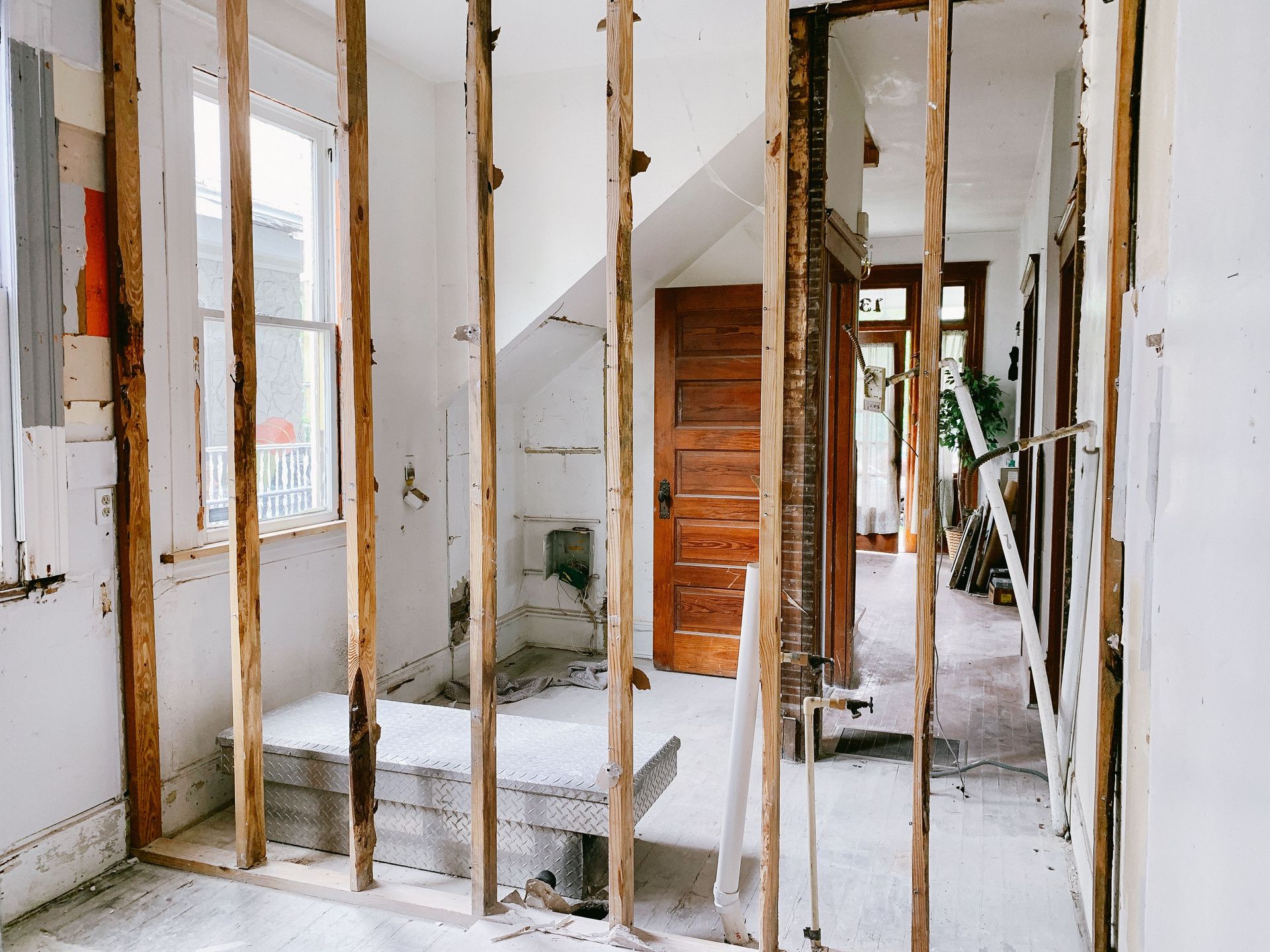
For a coastal Northeast Florida home, the material choice usually comes down to budget, wall access, and how the home will be insured going forward. Copper costs the most per linear foot but remains the benchmark insurers are most comfortable with. PEX costs less, resists the scale and chlorine exposure that degraded the original polybutylene lines, and is now what most plumbers install by default. CPVC sits in between on cost and is widely accepted by carriers as well. If your project already involves opening walls — say, alongside a broader older-home renovation — that's typically the most cost-effective time to repipe, since the drywall is already coming down.
It's worth planning plumbing and insurance together rather than separately. A home that's already had its roof addressed for Florida's insurance rules can still get flagged and non-renewed purely on what's inside the walls, so if you're budgeting for one, it's worth checking the other at the same time.
Frequently Asked Questions
How do I know if my home has polybutylene pipes?
Polybutylene is gray or blue-gray and flexible. If your supply lines are rigid and cream-colored, they're more likely CPVC. A licensed plumber can confirm the material and put it in writing for your insurer.
Will replacing my pipes guarantee my policy is renewed?
Not automatically. Get written confirmation from your carrier before you spend money on a repipe; some insurers requote once the flagged material is gone, others require additional documentation first.
Does homeowners insurance cover the cost of repiping?
Generally no. Insurers typically won't pay to replace pipe material proactively; the repipe is a homeowner cost, separate from any claim for damage the old pipes may have already caused.
Is cast iron drain pipe as big a problem in Jacksonville as it is in South Florida?
It's less common here than in older South Florida construction, but Northeast Florida homes built before the mid-1970s can still have it. A camera scope inspection is the only reliable way to know its condition.
What if I can't get coverage from any private carrier?
Citizens Property Insurance Corporation is Florida's insurer of last resort, though it applies its own age-based rules on polybutylene. If both private carriers and Citizens decline, a licensed surplus lines broker is the remaining legitimate option.
Can a partial repipe solve the problem, or does it have to be the whole house?
It depends on what the four-point inspection flagged. If only one section, a single bathroom addition on old galvanized branch lines, for example, is the issue, a targeted repipe of that section can sometimes satisfy the underwriter. If the flagged material runs throughout the home, insurers generally want the full system addressed, since a partial fix still leaves the same failure risk in the untouched sections.
Sunshine State Professional Services has spent years building trust with Northeast Florida homeowners one project at a time, and that starts with giving you a straight answer, not a sales pitch. If a four-point inspection or an insurance letter has flagged your plumbing, reach out for a free consultation and our licensed team will walk you through exactly what's involved and what it costs before anything is decided. Learn more about our team or see how plumbing fits into a higher-ROI renovation plan. If a leak has already caused damage, our restoration team handles that side of the project too.