ADU vs. Home Addition in Jacksonville, FL: Which Adds More Value in 2026? | Sunshine State Pro
If you've outgrown your current floor plan but moving doesn't pencil out, you've probably landed on one of two options: build an accessory dwelling unit in the backyard, or add on to the house you already have. Both solve the space problem. They don't solve it the same way, and in Jacksonville, the rules, the cost predictability, and the resale math are different enough that the choice deserves more than a coin flip.
What Jacksonville's 2022 ADU Ordinance Actually Allows
An ADU is a self-contained second home on your lot — its own kitchen, its own bathroom, its own front door — not just an extra room tacked onto the house. Jacksonville only opened the door to building them citywide in November 2022, when City Council passed Ordinance 2022-0448 on a close 12-7 vote, nicknamed the "Keeping Our Families Together Act." That reporting lays out the specifics homeowners actually need to know before they design anything:
- The ADU has to match the primary home's architectural style and color, and can't be taller than the main house.
- Size is capped at 25% of the primary structure's square footage or 750 square feet, whichever is smaller.
- It must sit behind the main house — not beside it, not on its own lot like a tiny home.
- Rentals are allowed, but not for stays shorter than 7 days, and the owner has to live in either the main house or the ADU (never rent out both).
- The ordinance doesn't apply in the Beaches, Baldwin, or any HOA or deed-restricted neighborhood that already prohibits ADUs — check your HOA covenant before you fall in love with a floor plan.
None of that is optional, and getting even one detail wrong on the permit application is enough to get a project flagged. We handle every ADU permit in-house — building it into our Duval County ADU projects from the first sketch, so you're not the one deciphering city code.
The ordinance passed by a narrow margin for a reason worth knowing about: the same Times-Union coverage notes it was pitched by its sponsor as one response to Jacksonville's housing shortage and rising rents, while opponents on council worried about parking, noise, and neighborhood character. That fight is exactly why the rules landed as strict as they did — the compromise version that passed leans conservative on size and placement compared to some other Florida cities' ADU rules. Worth keeping in mind if you're comparing what you've read about ADUs elsewhere to what's actually allowed here.
What You Get With a Home Addition Instead
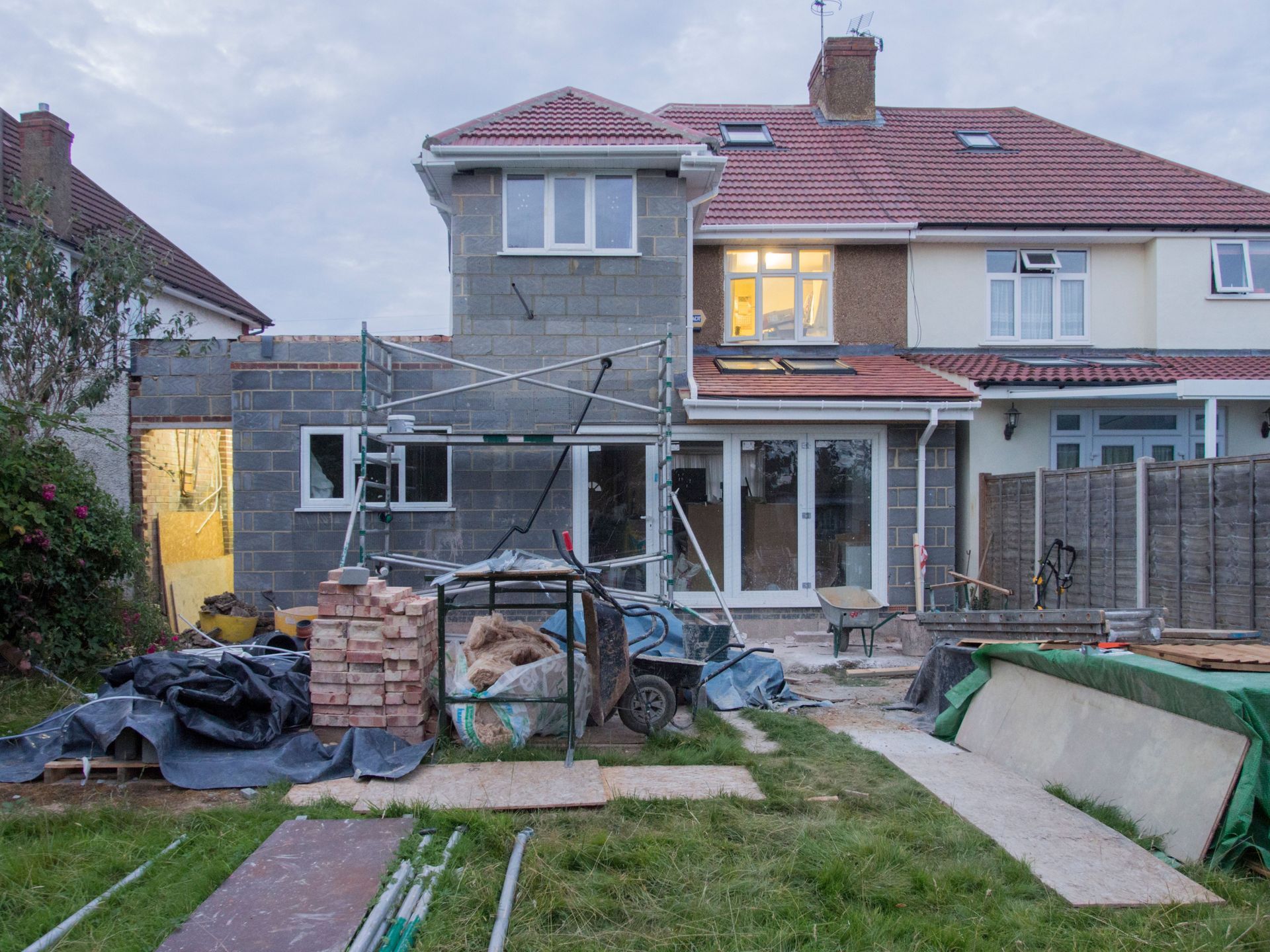
A home addition is a different animal. It's physically connected to your existing house, it draws on the same systems, and — critically — it's not a separate legal dwelling. There's no second kitchen, no owner-occupancy rule, no 7-day rental minimum to track. If what you actually need is a bigger primary suite, a fourth bedroom, or a family room that doesn't require walking outside to reach, an addition gets you there without the ADU ordinance's design and occupancy restrictions attached.
The tradeoff is flexibility. An addition becomes part of the main house permanently. It can't later become a rental unit or a separate space for an adult child or aging parent the way an ADU can. If you're weighing the two, it's worth reading how we break down what a home addition actually costs in Jacksonville before comparing it against ADU pricing.
Resale Value: It Depends on Your Buyer, Not Just Your Square Footage
There's no universal answer here, and anyone who quotes you a flat percentage without asking about your neighborhood is guessing. Realtor.com surveyed real estate agents and builders around the country on exactly this question, and the honest answer that came back was: it depends on what buyers in your specific market are shopping for.
Their reporting found that additions tend to win on simplicity the added square footage folds directly into the home's appraised value, and buyers understand a fourth bedroom without needing it explained. One builder quoted in the piece put it plainly: from his experience flipping homes, "a home addition gets more in resale value than an ADU, assuming their size is roughly equal." ADUs, on the other hand, earn their value differently through rental income potential and appeal to multigenerational households, which matters more in tight, high-demand rental markets than in places with more elbow room. The same reporting flagged a real risk on both sides: over-improving past what your neighborhood supports, whether that's an addition priced above what nearby comps will bear or an ADU with permitting and utility costs that run longer than expected.
For Northeast Florida specifically, that means the right answer depends on your street, not a national average.
Permits, Fixed Pricing, and Who Actually Handles What
Whichever direction you go, the paperwork is the part most homeowners underestimate. We built our process around not making that your problem. Every ADU or addition we quote is a fixed price before we break ground no surprise change orders unless you ask for one and we handle the entire permitting relationship with the City of Jacksonville's Building Inspector ourselves, including the ADU-specific requirements that trip up owner-managed projects.
Every job also gets a dedicated project manager, and every structure we build meets Florida Building Code's hurricane-resistant construction standards not an upgrade, the baseline. Our founder, John Belizario, started in this trade as a subcontractor before earning his general contractor license, and that ground-level experience shapes how we still run jobs today: "My goal is not just to do a good job but make sure my customer understands and is happy with the final result." Before you sign with anyone for a project this size, it's worth knowing how to verify a contractor's license in Florida — ours is CGC1526737, verifiable through the state's DBPR lookup.
Financing is usually the other piece homeowners want settled before they pick a direction. We offer financing options through our lending partners for both ADUs and additions loan amounts up to $250,000, funding within 1–3 days, no home equity required, and no prepayment penalty if you want to pay it off early. It's part of the same conversation as the fixed-price quote: know the real number, and know how you're paying for it, before the crew shows up.
Which Northeast Florida Homeowners Should Choose Which
A few patterns show up often enough in our own project mix to be worth naming directly:
Choose an ADU if:
- You want a separate space for an aging parent or adult child while keeping everyone on the same property.
- You're interested in long-term rental income and can commit to owner-occupying one of the two units.
- You'd rather add flexible square footage that doesn't get absorbed into (and locked to the layout of) your existing house.
Choose an addition if:
- You need the extra space to function as part of your everyday household a bigger kitchen, another bedroom, a larger primary suite.
- You want to avoid the ADU ordinance's owner-occupancy and rental-length rules entirely.
- Your HOA or deed restrictions rule out a detached structure.
We're also seeing more homeowners consider both options for the same reason: today's mortgage rates make moving expensive, so improving the home you already own has become the more practical move for a lot of Jacksonville families. If you're still deciding whether to renovate at all, our breakdown of remodeling versus moving in Jacksonville walks through that decision in more detail, and if your goal leans toward aging-in-place accommodations rather than rental income, it's worth a look at what we cover on home accessibility upgrades as well. And if freestanding, unattached living space is the goal without the ADU ordinance's behind-the-house placement rule, a tiny home is worth a separate look it plays by different zoning rules entirely.
Frequently Asked Questions
Do I need a permit for an ADU in Jacksonville?
Yes. Every ADU requires a building permit, and the application must confirm the project complies with the 2022 ordinance and any HOA restrictions on your property. Misstating that on the application can result in a fine, whether the mistake was intentional or not.
Can I rent out my ADU?
Yes, but not for stays under 7 days, and you're required to live in either the primary home or the ADU — you cannot rent out both structures at once.
Does my HOA affect whether I can build an ADU?
It can. Jacksonville's ordinance does not override an existing HOA or deed restriction that already prohibits ADUs, so that's the first thing to check, before design work starts.
Which costs less, an ADU or a home addition?
It depends on size, finishes, and site conditions on your specific lot there's no reliable flat number that applies to every property. We provide a fixed-price quote for both options so you can compare real numbers side by side before deciding.
Can an addition become a rental unit later?
No. Because an addition isn't a legally separate dwelling, it can't be rented out independently or occupied as a standalone unit the way an ADU can.
Do you offer financing for ADUs and additions?
Yes. We work with lending partners to offer loan amounts up to $250,000 with funding in as little as 1–3 days, no home equity required, and no penalty for paying it off ahead of schedule.
Ready to Compare Your Options?
The right answer between an ADU and a home addition comes down to your lot, your HOA, your goals, and your neighborhood's resale market — not a rule of thumb. Our team walks Northeast Florida homeowners through both options with a fixed-price quote and full permitting handled in-house. Call (904) 517-2427 or reach out through our site for a free consultation.