Home Addition vs. Moving in Jacksonville, FL: Why More Homeowners Are Renovating in 2026 | Sunshine State Pro
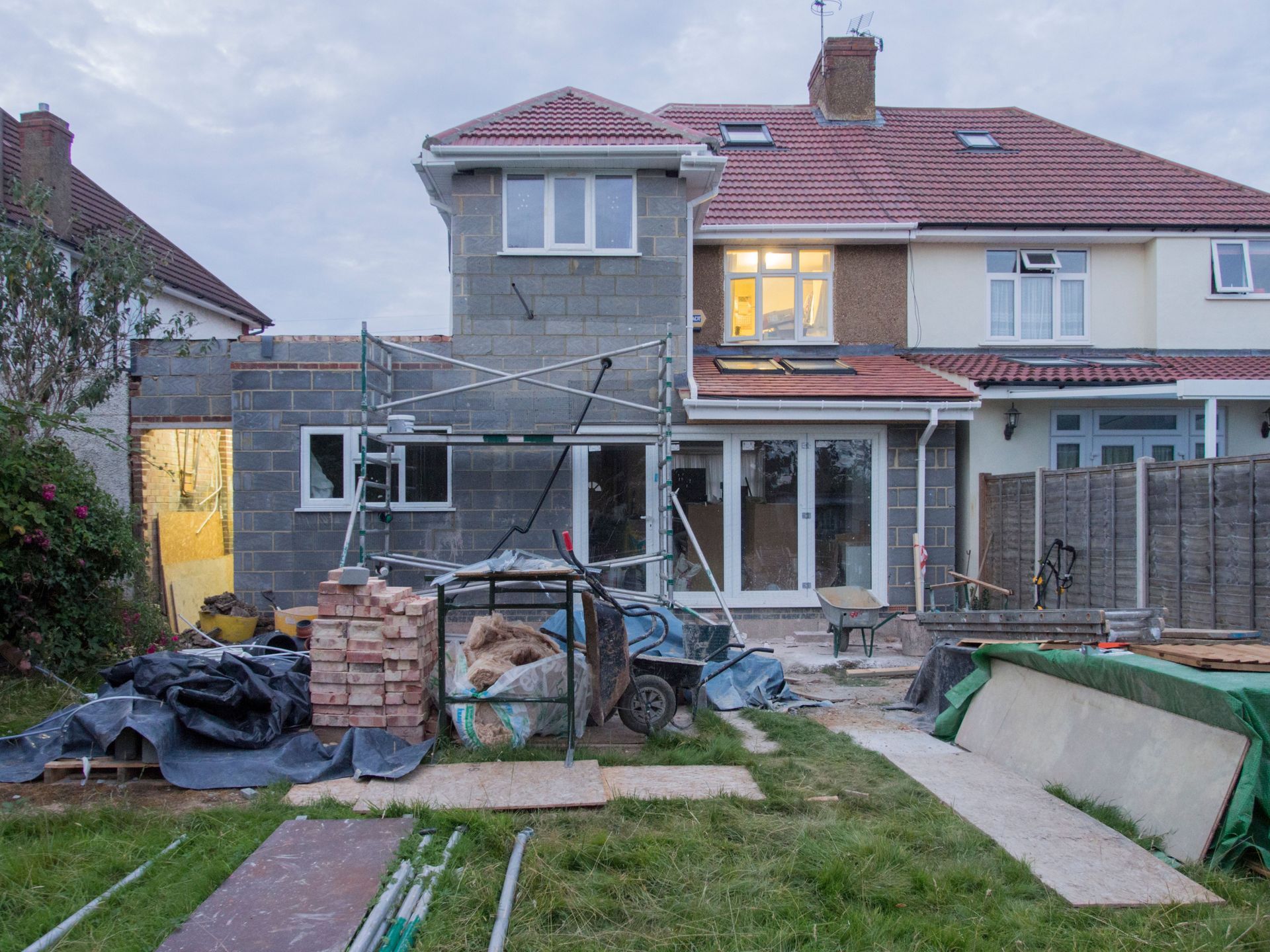
If you've outgrown your current home in Jacksonville, the instinct used to be simple: sell it and buy a bigger one. That math has changed. New national survey data shows most homeowners who improve their homes today are choosing to expand what they already have instead of moving — and the reasons trace directly back to mortgage rates, home prices, and the hassle of a move most people would rather skip. Here's what the data actually shows, why it matters even more in Northeast Florida, and how a home addition compares to your other options.
Why More Homeowners Are Renovating Instead of Moving in 2026
According to a Redfin-commissioned survey of 4,000 U.S. residents fielded by Ipsos in November 2025, 43% of Americans renovated their home in the past year, and another 33% plan to renovate in the next year. The more telling number is why: roughly two-thirds (65%) of recent renovators chose to upgrade their current home instead of moving to a new one, and among homeowners planning to renovate in the next year, that number climbs to 71%.
Redfin's head of economics research, Chen Zhao, put it plainly in the report: many homeowners are choosing to "stay put and make the home they already have work for them" — whether that means updating outdated spaces, adding room for a growing family, or reconfiguring what they have so it actually fits how they live. Younger homeowners (Gen Z and millennials) and homeowners with kids still at home were the most likely groups to choose renovating over moving, according to the same survey.
This isn't a Jacksonville-specific trend — it's national. But it lines up closely with what we're hearing from homeowners across Duval, Nassau, and St. Johns counties: families who need more space aren't necessarily looking to leave the neighborhood, school district, or home they already love. They're looking for a way to make it fit.
The Mortgage Rate Lock-In Is Real
The math behind the "renovate, don't relocate" trend comes down to what homeowners would give up by moving. A separate Redfin analysis of Federal Housing Finance Agency mortgage data found that 78.8% of mortgaged U.S. homeowners currently hold a rate under 6% — a rate most would lose the moment they took out a new mortgage on a different house, even with rates having eased somewhat, with Freddie Mac's weekly average recently dipping to 5.98%. That same Redfin data shows roughly one in six homeowners (16%) say they're staying in their current home specifically because they don't want to give up their existing mortgage rate.
For a homeowner who locked in a rate years ago, moving doesn't just mean a new address — it means a new, higher monthly payment on top of realtor commissions, moving costs, and the time it takes to find something that actually fits. A home addition sidesteps all of that. You keep your rate, your neighborhood, and your equity, and you put the investment directly into the property you already own.
What's Pulling Jacksonville Homeowners Specifically Toward Additions
Northeast Florida adds a few local wrinkles on top of the national trend. Jacksonville, Fernandina Beach, and the surrounding barrier island communities have limited inventory of larger move-up homes in established, walkable neighborhoods the kind of homes people are typically trying to move into when they outgrow a starter house. Building an addition onto a home you already own, in a location you already picked, often gets you there faster than waiting for the right listing.
There's also a permitting angle unique to this area. Home additions in Jacksonville have to be built to Florida Building Code hurricane-resistance standards regardless of whether you're adding on or building new so the code compliance work you'd have to do anyway on a new home purchase (wind mitigation, impact-rated openings, updated electrical) gets folded directly into the addition project instead of becoming a separate to-do list after closing.
What a Home Addition Actually Solves
Most of the homeowners we talk to aren't chasing square footage for its own sake they're solving a specific problem. A growing family needs a fourth bedroom. A remote worker needs a real office instead of a corner of the dining room. Aging parents need a suite on the ground floor. A home addition is built to match your home's existing architecture, so the new space reads as if it was always part of the house, not an obvious add-on.
The advantage over buying a new home is that every dollar goes toward the specific problem you're solving, in the home and neighborhood you already know. You're not paying for square footage or features you don't need just because they came bundled with a house that was otherwise a fit.
Home Addition vs. ADU: Which Fits Your Property
An addition isn't the only way to add space. An accessory dwelling unit (ADU) a detached or attached secondary living space is worth considering if what you actually need is separate living quarters: a place for aging parents, adult children, or a long-term guest, or a legal rental unit to help offset a mortgage payment. Jacksonville's 2022 ADU ordinance set clear rules for size limits and architectural matching, and we build to that ordinance in Duval County as well as Nassau County and Saint Johns County.
If the space needs to stay connected to your existing home a bigger kitchen, another bedroom, a primary suite an addition is almost always the more direct answer. If the space needs its own entrance, its own utilities, or its own address for a tenant or family member, an ADU is usually the better fit. Either way, the decision should start with what the space is actually for, not which option sounds bigger.
What Sunshine State Pro Brings to a Home Addition Project
Sunshine State Professional Services is a licensed general contractor (CGC 1526737) built the same way its founder, John Belizario, built his career from the ground up. John started as a subcontractor in Northeast Florida construction before investing in himself to earn his general contractor license, and that hands-on trade background shapes how the company runs every project today: an in-house team of engineers, estimators, project coordinators, and project managers who work together on your addition from permit application to final inspection.
Every addition is quoted at a fixed price before work begins, so there are no surprise change orders partway through the project, and every project is built to Florida Building Code hurricane-resistance standards because Northeast Florida's climate doesn't leave room to cut that corner. For homeowners who don't want to pull equity out of their home to fund the project, Sunshine State also offers financing up to $250,000 with funding in 1–3 days and no home equity required worth comparing against the HELOC, home equity loan, and FHA 203(k) options covered in our financing guide.
If you're still deciding whether a general contractor is even the right call for your project, it's worth understanding what a Florida GC license actually requires and what separates a licensed, family-owned contractor from an unlicensed handyman or a national chain. And because Florida's building code is changing at the end of this year, any addition planned now should account for what the 9th Edition Florida Building Code changes.
Frequently Asked Questions
Is it cheaper to add onto my home or move in Jacksonville, FL?
It depends on your current mortgage rate and how much space you actually need. If you locked in a rate below today's market rate, moving means giving that up along with realtor commissions and moving costs. An addition lets you keep your rate and put the money directly into solving your space problem instead of paying for an entire new house.
How long does a home addition take in Jacksonville?
Most additions move from design through move-in in roughly 4–7 months, depending on scope, permitting timelines, and how much the addition needs to tie into existing structural, electrical, and plumbing systems.
Do I need a permit for a home addition in Duval County?
Yes. Any addition that changes your home's footprint or structure requires a building permit, and it has to meet current Florida Building Code hurricane-resistance requirements. A licensed general contractor handles the permit application and inspections as part of the project.
Should I build a home addition or an ADU instead?
If the new space needs to stay connected to your existing living area, an addition is usually the right call. If you need a separate unit with its own entrance for family, guests, or a rental an ADU is typically the better fit. See the comparison above for more detail.
Does Sunshine State Pro offer financing for home additions?
Yes. Sunshine State offers financing up to $250,000 with funding in 1–3 days and no home equity required, in addition to standard options like HELOCs and home equity loans.
Ready to Add On Instead of Moving?
The national data backs up what a lot of Jacksonville homeowners already suspect: moving isn't the only way to get the space you need, and for most people right now, it isn't even the first choice. If your home is close — just missing a room, a suite, or a little more square footage — a home addition built by a licensed, local team may get you there faster and for less disruption than a move. Sunshine State Pro offers free consultations and fixed-price quotes on home additions throughout Jacksonville, Fernandina Beach, Ponte Vedra, and St. Augustine. Call (904) 517-2427 to talk through your project.