Termite & Wood Rot Damage in Jacksonville, FL: What Florida Law Requires Before You Renovate
Northeast Florida's heat and humidity aren't just uncomfortable, they're exactly what termites and wood-decay fungi need to thrive. If you're planning a renovation, addition, or ADU build in Jacksonville, Fernandina Beach, or anywhere in Nassau, Duval, or St. Johns County, termite and wood rot damage isn't a hypothetical. It's one of the most common surprises a contractor finds once the walls come open, and Florida law has specific rules about how that damage has to be documented and disclosed.
This guide walks through what subterranean termites, drywood termites, and wood rot actually do to a home, what Florida's Wood-Destroying Organism (WDO) inspection law requires, and what happens when damage turns up mid-project. It's written from Sunshine State Professional Services' perspective as a licensed general contractor (CGC 1526737) that handles the structural repair side of these discoveries every year.
Why Termite and Wood Rot Damage Matters Before You Renovate
According to the Florida Department of Agriculture and Consumer Services (FDACS), termites cause more damage to structures in Florida than fires, floods, and storms combined — and homeowners insurance does not cover termite damage. That last part catches a lot of Jacksonville homeowners off guard mid-renovation: if a contractor opens a wall and finds termite-damaged framing, that repair cost falls on the homeowner, not the insurance company.
The EPA estimates termites cause billions of dollars in structural damage nationwide every year, with property owners spending over two billion dollars annually on treatment alone. For a renovation budget, that makes early identification — before demo starts, not after — the difference between a manageable line item and a blown budget.
Subterranean Termites, Drywood Termites, and Wood Rot: What's Actually Damaging Your Home
Florida has four recognized termite types — dampwood, drywood, subterranean, and the invasive conehead termite — plus wood-decay fungi, which behave differently from insects but cause similar structural damage. Per the University of Florida's IFAS Extension ( EDIS Publication IN1277), the global economic impact of termites is estimated at $40 billion annually, and subterranean termites alone account for roughly 80% of that damage.
Subterranean termites live in the soil and build mud tubes to travel above ground, feeding with the grain of structural wood — often leaving only a thin, deceptive veneer of intact wood at the surface. That's why a termite inspector taps and probes baseboards and door frames rather than relying on a visual check alone. Drywood termites, by contrast, live entirely inside sound wood with no connection to the soil, leaving telltale six-sided pellets. Wood rot (decay fungi) requires sustained moisture and is common in Jacksonville's older homes around leaking gutters, poor grading, or AC condensation lines draining too close to the foundation.
The WDO Inspection Report Florida Law Requires
Florida doesn't leave termite disclosure to chance. Under Florida Statute 482.226, any licensed inspector who performs a Wood-Destroying Organism (WDO) inspection for a real estate transaction — for a fee or on written request — must provide a formal inspection report on a state-prescribed form. That report has to identify:
- Every area inspected, and any areas that were inaccessible
- Any visible evidence of prior treatment or infestation
- The specific wood-destroying organisms found and any visible damage
- Whether treatment was performed at the same visit, and what pesticide was used
The inspector also has to post a physical notice — at least 3x5 inches, rated to last three years — at the attic or crawlspace access point, and keep a copy of the report on file for at least three years. If you're buying an older Jacksonville home specifically to renovate it, pulling the WDO report from the closing (or ordering a fresh one) before you finalize your renovation scope can save you from a mid-project surprise.
What Happens When Damage Turns Up Mid-Renovation
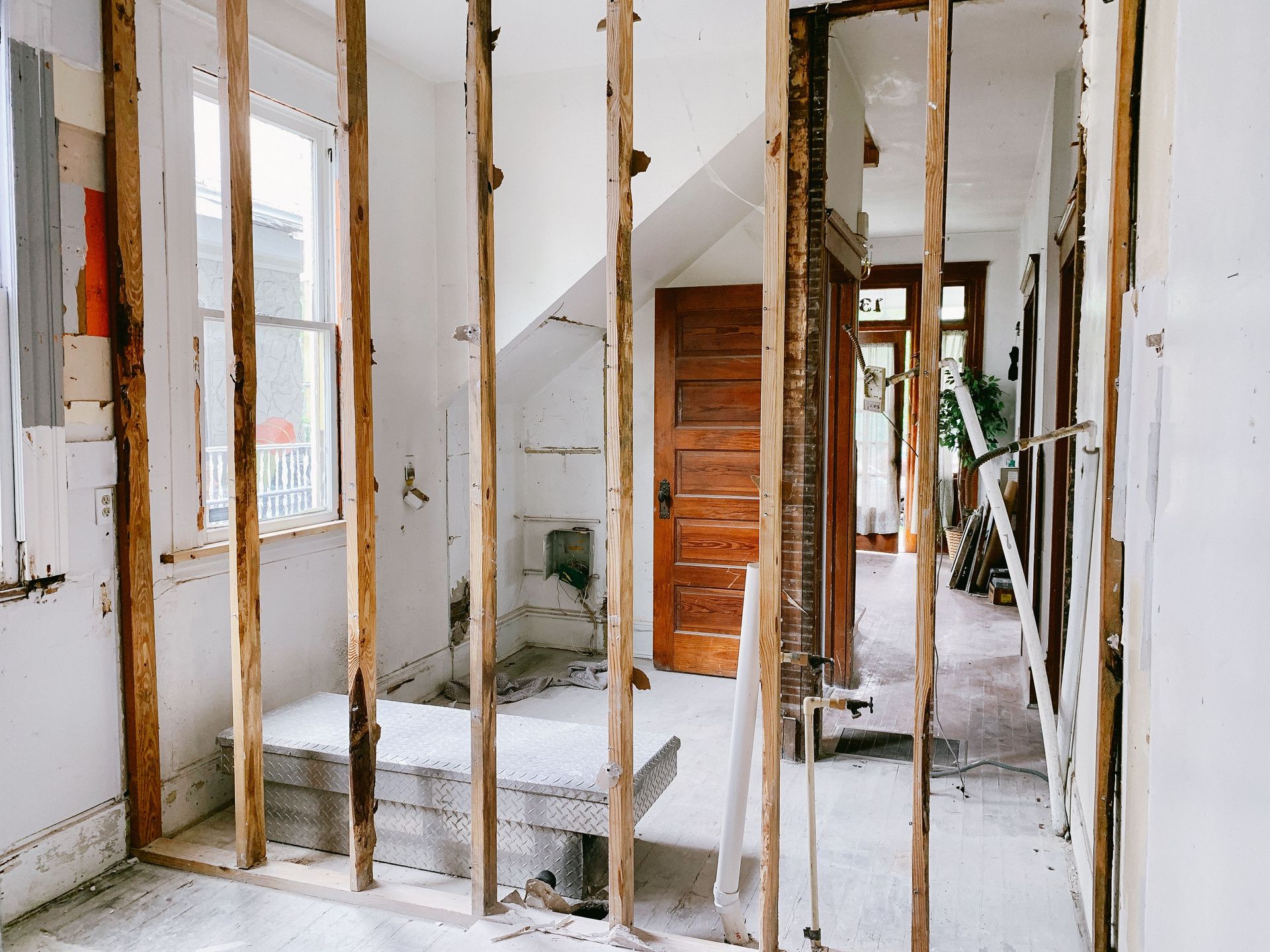
Termite or rot damage found once walls, subfloor, or roof decking are opened up changes the sequence of a project, but it doesn't have to derail it. The order matters: any active infestation needs to be treated by a licensed pest control company first, since building over active termites just seals the problem inside the wall. Once the structure is clear, a licensed general contractor handles the actual rebuild, sistering or replacing damaged studs, sill plates, joists, or roof decking to current Florida Building Code standards, not just patching the visible section.
This is where home addition and remodeling projects most often hit this fork: a homeowner budgets for finishes and layout changes, then the demo phase reveals structural damage nobody could see beforehand. In practice, that repair scope usually means sistering new lumber alongside a damaged stud or joist when the damage is localized, or fully replacing a sill plate, subfloor section, or roof deck sheathing when it isn't. None of that is cosmetic work, it has to pass the same inspection as any other structural framing on the job, which is why it needs to be scoped and permitted by the general contractor, not patched over by whoever happens to be on site that day.
Founder John Belizario built Sunshine State around exactly this kind of full-service coordination: "My goal is not just to do a good job but make sure my customer understands and is happy with the final result." Rather than a homeowner juggling a pest control company and a separate contractor with no one owning the sequencing, Sunshine State's in-house team of estimators, project coordinators, and project managers can flag structural risk early and coordinate the repair as part of the renovation timeline, for homeowners anywhere from Jacksonville and Jacksonville Beach to Ponte Vedra, St. Augustine, and Fernandina Beach.
Prevention: Reducing Termite Risk Before and During Construction
IFAS Extension's homeowner guidance centers on moisture and access control, and it applies directly during a renovation or addition:
- Keep at least 6 inches of inspection space between exterior wall siding and the soil or mulch line
- Eliminate direct wood-to-ground contact anywhere on the structure
- Direct A/C condensation lines and irrigation heads away from the foundation, not toward it
- Install and maintain gutters so water flows away from the structure
- Keep landscape plants at least 2 feet from exterior walls, and trim branches so they never touch the roof subterranean termites use branches as bridges
For new additions and ADU builds specifically, pre-construction soil termiticide treatment or borate-treated framing lumber is far cheaper to build in up front than to retrofit later. Worth noting if your project includes spray foam insulation: IFAS Extension flags that many pest control companies won't warranty a home with spray foam insulation, because it can block the inspection access needed to catch termite activity early. That's a conversation worth having with your contractor before insulation goes in, not after.
Renovating an Older Jacksonville Home? Watch These Risk Areas
Homes built before modern slab-and-vapor-barrier construction, or homes in Jacksonville's historic neighborhoods, carry higher wood-rot and termite exposure, a theme we covered in more depth in our guide to renovating an older home in Jacksonville. Crawlspace framing, original wood window sills, and any area with a history of roof or plumbing leaks deserve a WDO inspection before scope and budget are finalized, not after. If damage is extensive enough to raise the renovate-vs-rebuild question, our renovate or build new decision guide walks through that comparison.
Why Hire a Licensed General Contractor for the Structural Repair
Pest control companies treat the infestation; they generally don't rebuild load-bearing framing. That work requires a licensed general contractor pulling the correct permits and repairing to current Florida Building Code. Before hiring anyone for either side of the job, it's worth knowing how to verify a contractor's license in Florida — Florida has stepped up enforcement against unlicensed contractors, and our breakdown of unlicensed contractor penalties covers what's at risk if you skip that step. If you're not sure what to ask before signing, our seven questions to ask a general contractor guide is a good starting point, and our overview of what a full-service renovation contractor actually coordinates explains why one licensed team beats juggling separate vendors. Any structural repair still needs to go through Jacksonville's standard permitting process, see our guide to navigating Jacksonville's building permits for what that involves.
Frequently Asked Questions
Does homeowners insurance cover termite damage in Florida?
No. Per FDACS, termite damage is not covered by standard homeowners insurance policies in Florida, which is why catching it before or early in a renovation matters for your budget.
Is a WDO inspection legally required before I renovate?
Florida Statute 482.226 requires a formal WDO inspection report only when the inspection is performed for a real estate transaction and a fee is charged or a report is requested. It's not automatically required before a renovation, but ordering one is a low-cost way to scope structural risk before demo begins.
Can I treat termites myself before a renovation?
Identification and treatment generally require a licensed pest control professional, misidentifying the termite type leads to using the wrong (and often costly) treatment method. Structural rebuilding after treatment should go through a licensed general contractor.
What's the difference between termite damage and wood rot?
Termites are insects that consume wood cellulose; wood rot is fungal decay caused by sustained moisture. Both compromise structural wood, but they require different remediation, pest treatment for termites, moisture correction and wood replacement for rot.
If a renovation, addition, or ADU project uncovers termite or wood rot damage, Sunshine State Professional Services coordinates the structural repair as part of the build — no juggling separate vendors, no guessing on scope. Get in touch to talk through what your Northeast Florida project needs.